How should orchids be watered when grown indoors at home?
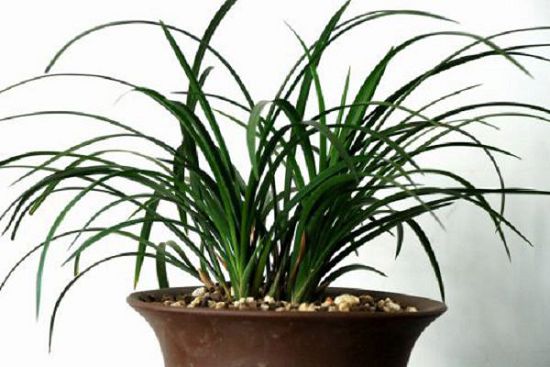
Growing orchids indoors is currently the most common way to grow orchids. The author now offers orchid enthusiasts some insights on water management for indoor orchid growing from recent years.
1. Decide on the watering method according to the orchid variety and how robust the orchid plants are. For example: for robust seedlings of Cymbidium goeringii (spring orchid) and Cymbidium ensifolium (sword-leaf orchid) grown indoors, a water method based mainly on soaking the pot can be used. If famous varieties of Cymbidium goeringii are grown mainly in clay pots, then choose a water method based mainly on soaking the pot and misting the surface soil of the orchid pot. If they are orchid seedlings, weak plants, or precious varieties, a fine misting water method is more suitable.
Watering by soaking the pot: in summer, choose the time after sunset; during extreme heat, choose midnight or 6 a.m., because at these times the air temperature and water temperature are similar, and the orchid's root system, after a period of rest, is still in a relaxed state, so after soaking the pot the orchid roots are less likely to accumulate too much standing water. In addition, morning is also the time for the orchid's photosynthesis, and its root system can carry out oxygen-absorbing activity under such relatively favorable conditions, which can inhibit the growth of harmful microorganisms. Soak the pot once every 3 to 5 days, but specific situations require specific analysis.
Watering by soaking the pot plus misting: 2 to 3 days after soaking the pot, mist the surface soil of the orchid pot to moisten it each day, so that the orchid can grow under conditions that are neither dry nor too wet. This method is relatively beneficial to the growth of the orchid's root system.
Watering by fine misting: this method is suitable for environments with relatively stable temperature and humidity, and especially suitable for orchid seedlings, weak plants, or precious varieties. Use a handheld or automatic sprayer to spray, producing a misty, diffuse effect, which is beneficial for cultivating orchid seedlings or precious varieties such as variegated-leaf types.
2. Watering orchids requires care, attentiveness, and thoughtfulness. Orchid leaves, flowers, and so on are all barometers reflecting the water condition. Good water management shows itself in glossy leaf color, smooth leaf edges, clear veins, and robust and lush plants. When to water the orchids, how much water to give, and so on, require the orchid grower to be careful, attentive, and thoughtful during the watering process, that is, carefully observe the dryness and moisture of the surface soil of the orchid pot, grasp the timing, and water carefully; conscientiously check the orchid's leaves and leaf color, and even the growth condition of the orchid plant, promptly prescribe the right remedy and adjust the amount of water given to the orchid; for different orchid varieties, the amount of water given must be scientifically controlled, and it is not appropriate to apply one uniform standard.
3. When watering orchids, the water quality must be clean. It is best to use unpolluted water such as spring water, well water, or stream water with a pH value of about 7. If tap water is used for spraying, it must be left to settle for 2 days before use. Water that has been stored for too long is generally not used, to avoid causing orchid diseases.