A detailed guide to the cutting propagation method of Ixora, teaching you how to propagate it correctly from cuttings
Ixora is a very common flowering plant in southern China. It has very high ornamental value, and there are also many varieties, making it suitable for potted cultivation. In addition, the rhizome of Ixora can also be used as medicine, with various medicinal effects such as dissipating blood stasis and stopping bleeding, regulating menstruation, and lowering blood pressure. When growing Ixora, the propagation method is very important, and among them, cuttings are the main method. So how should Ixora be propagated from cuttings? Now let's take a look together with the editor at the cutting propagation method of Ixora!
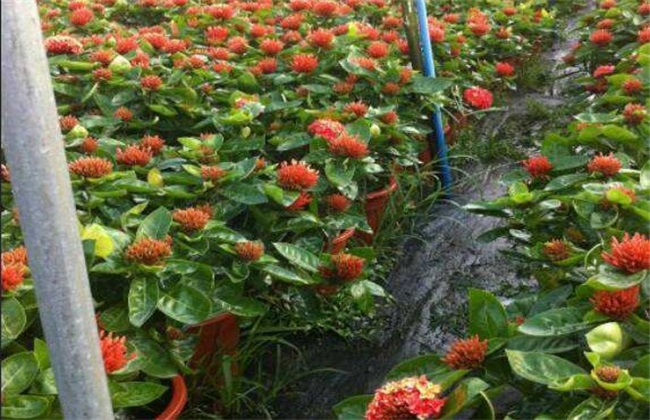
1. Factors affecting rooting of cuttings
When we propagate Ixora from cuttings, we must first understand the factors that affect the rooting of Ixora cuttings. The suitable seedbed temperature for Ixora cuttings is around 30°C, and the air temperature should be controlled at around 24°C. Therefore, it is best to carry out cutting propagation in late spring and summer. Usually, natural light can meet the light requirements for rooting of cuttings. However, under the high-temperature and strong-light environment of summer, cuttings are prone to wilting. So it is best to use mist propagation for seedling cultivation, and after cutting, shading work should be done well. It is best to keep the shading rate at around 60%, then gradually reduce it to 45%, and finally remove the shading material after rooting.
2. Cutting the cuttings
The quality of the cuttings has a very large impact on the growth ability of the seedlings. Therefore, we must select excellent cuttings. In spring and summer, the plant will produce more young shoots. At this time, cut them when the young shoots have grown to about 10 cm and have not yet bloomed. This should be done in the evening on a sunny day, ensuring that the cuttings are free of pests and diseases, free of wounds, robust, and uniform in size. The weight should be controlled at around 4 g, and the length should be kept within the range of 11-13 cm. The branches should not be too tender and should be in a semi-hardened state. Usually, side branches are the main choice, and the main branches from heavy pruning can also be selected.
3. Treatment of cuttings
Ixora has a very large number of varieties, and the rooting rate will also differ among varieties. Usually, if it is a small-leaved dwarf variety, then rooting is relatively easy. Therefore, this kind of variety can root fairly quickly even without treatment. On the contrary, if the cutting variety is a large-leaved type, then rooting is relatively difficult. Therefore, before cutting, we should use rooting agents such as indolebutyric acid to treat the cuttings, which can effectively increase the rooting rate. During treatment, it is generally mainly done by soaking in a low-concentration rooting agent for a longer time or dipping in a high-concentration rooting agent for an instant.
4. Substrate selection
The cutting substrate has a great relationship with the rooting rate of cuttings. The cutting substrate must ensure good water and fertilizer retention, permeability, and cleanliness without pathogens. Generally, materials such as perlite and river sand can be used to prepare it. If river sand is used alone, although permeability is strong, water and fertilizer retention are very poor, so attention should be paid to mixing it with perlite. After preparing the cutting substrate, insert the cuttings directly into the substrate, then water to keep the substrate moist. After about 40 days, the cuttings can root, and 10 days after rooting, they can be transplanted.
The above is a brief introduction to the cutting propagation method of Ixora. That is all for today's introduction. This article is for reference only, and I hope it can help everyone!