Detailed Explanation of Mallard Duck Breeding Technology and Management Methods
The mallard duck is a type of duck breed and is also an important waterfowl with relatively high economic value. The meat of the mallard duck is very tender, basically without any fishy smell, and its nutritional value is also very high, making it a typical high-protein, low-fat meat. Therefore, it has a very large market demand and breeding area in our country. So how should mallard ducks be raised? Below, the editor brings you the breeding technology for mallard ducks. Let's take a look!
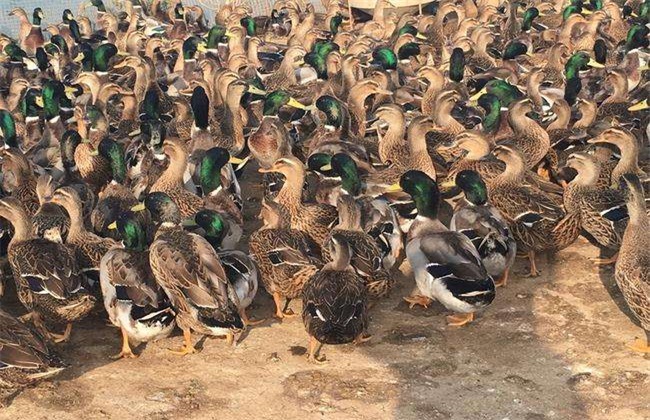
1. Duck House Environment
Before breeding mallard ducks, we first need to build a good duck house. The duck house should be built around the growth habits of mallard ducks, with half being a rest area and half being an activity area. The activity area should be a pond with sufficient water sources. Moreover, mallard ducks have relatively strong wildness, so attention should be paid to keeping away from residential areas, which facilitates the feeding and epidemic prevention work for mallard ducks. The rest area of the duck house should maintain good ventilation, be laid with good bedding material, and the duck house should be disinfected regularly, etc., to create a good growth environment for mallard ducks and improve breeding efficiency.
2. Brooding Period Management
Within one month of age, mallard ducks are in the brooding period. At this time, we first need to control the temperature well. The temperature for the first three days should be maintained at around 28 degrees, and then lowered to 25 degrees by 10 days of age. The floor of the duck house should be laid with soft bedding material, and each pen should be installed with a heating lamp. Within one week of age, the stocking density of ducklings should be maintained at around 60 birds per sq m. Then attention should be paid to preventing ducklings from being crushed or suffocated when huddling to sleep. Then do the starting work well: they should drink water first before starting to eat, maintain sufficient drinking water, and there should be no water cutoff. For the first ten days, feed 7 times a day, then reduce to 5 times. And in the first half month, mainly use free feeding, then gradually change to scheduled feeding, and finally appropriately change the feeding amount according to changes in the body weight of mallard ducks.
3. Growing Period Management
After mallard ducks enter the growing period, feed should follow the principle of mixing and feeding on the spot. The feed should mainly be wet mixed feed, with scheduled feeding, to ensure normal growth of mallard ducks and provide them with sufficient nutrition. During the growing period, the stocking density should be maintained at around 15 birds per sq m. And because mallard ducks have a relatively strong feather-pecking tendency, we should focus on preventing feather-pecking. During activity, if mallard ducks gather in relatively high density, they should be dispersed in time. Finally, special attention should be paid to doing a good job of water bathing for mallard ducks, and controlling the number of water baths and the amount of water.
4. Fattening Period Management
When mallard ducks reach about 80 days of age, the feeding method should mainly be open-floor rearing. When mallard ducks are active, attention should be paid to setting up overhead netting and anti-escape measures in the activity area to prevent mallard ducks from escaping. Because mallard ducks are relatively large during the fattening period, the stocking density should be reduced to 2 birds per square meter. Feeding about twice a day is sufficient, and attention should be paid to supplementing sand grains during feeding. During the fattening stage, the activity level of mallard ducks should be increased, allowing them to freely bathe and move in water, and the water depth should be maintained at more than 0.7 m. After about 4 months of rearing, they can be marketed.
The above is a brief introduction to mallard duck breeding technology. That's all for today's introduction. This article is for reference only, and I hope it can help everyone!