How to grow arrowroot (Maranta)? Master the growing methods and precautions
Arrowroot (Maranta) is a foliage plant of the Marantaceae family with high ornamental value, and its flowering period is mainly concentrated in summer and autumn. Arrowroot is not only used for ornamental purposes, but can also produce a substance called arrowroot powder; arrowroot powder is basically all starch and has high edible value. Therefore, quite a lot of people now grow arrowroot. So how should arrowroot be grown? And what should be noted? Below, let's take a look together with the editor at the growing methods and precautions for arrowroot!
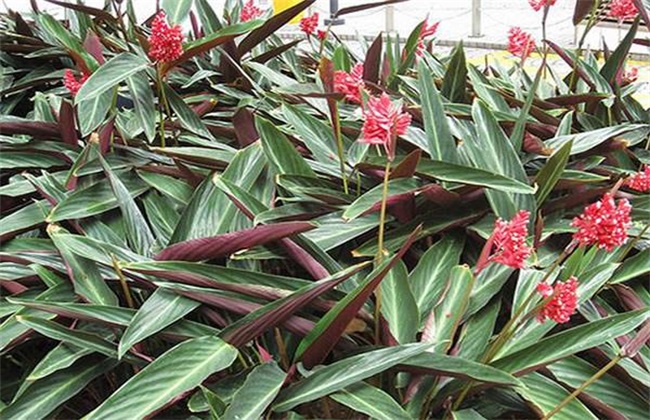
1. Growing environment
Before planting arrowroot, we must first clearly understand arrowroot's growth habits and the suitable growing environment. Arrowroot generally prefers to grow in a warm, humid environment, and a semi-shaded environment must be maintained. Arrowroot's tolerance to cold, drought, and strong light is relatively poor. It is also very sensitive to changes in moisture. Therefore, we should choose a suitable soil for planting according to arrowroot's growth habits. The soil environment should be based on the standards of sufficient fertility, softness, and normal drainage and irrigation, to ensure the normal growth of the Marantaceae plant.
2. Propagation methods
The propagation methods of arrowroot are generally mainly division propagation and cutting propagation. Because the survival rate of cutting propagation is lower than that of division propagation, division propagation is still mainly used. Division propagation can be carried out all year round as long as a suitable temperature and humidity environment is maintained. When propagating, use a sharp small knife to separate the root tubers with stems and leaves. If the propagation quantity is not large, then directly plant the separated root tubers into the soil. If the propagation quantity is relatively large and the temperature and humidity do not meet the requirements, then appropriately cover with film. Ensure the temperature is around 25 degrees and the humidity is around 80%, and then directly place the root tubers on the seedbed.
3. Water and fertilizer management
Arrowroot's demand for water is relatively large, but water should also be controlled well according to different varieties. When the soil is slightly dry, water it in time to keep the soil moist. Especially in summer, the watering frequency should be increased to avoid water evaporating too quickly; similarly, after winter arrives, the amount of watering should be controlled well to improve arrowroot's cold resistance. When fertilizing, pay attention to controlling the amount of fertilizer; excessive fertilization can easily cause leaf burn and root burn in arrowroot. The fertilizer should be mainly nitrogen fertilizer, but it should not be too much, to avoid excessive vegetative growth of the plant. An appropriate amount of phosphorus fertilizer can also be applied to improve the glossiness of the leaves. Finally, the principle of applying more frequently and in small amounts should be followed.
4. Precautions
Arrowroot prefers to grow in a warm environment, so we must pay attention to controlling the temperature well. When planting, the temperature should be controlled at around 20; in summer, cool it down in time, and the temperature must not be higher than 32 degrees. In winter, do a good job of cold protection and warmth preservation, and the minimum must not be lower than 10 degrees. Then pay attention to controlling the light intensity; the light must never be too strong. If the light is too strong, arrowroot leaves are very easily scorched, affecting growth. However, it should not be kept in a dark, low-light environment for a long time either; an appropriate amount of scattered light should be provided.
The above is a brief introduction to the growing methods and precautions for arrowroot. That is all for today's introduction. This article is for reference only, and I hope it can be helpful to everyone!