Detailed explanation of red bottlebrush cultivation techniques, from planting to care and management
Red bottlebrush, also known as the red rambutan tree, is an evergreen shrub plant in the myrtle family (Myrtaceae). It has a cultivation history of over a hundred years in our country, and red bottlebrush has relatively high ornamental value. It is a noble bonsai plant and can be used for cut flowers and potted plants. It also has effects such as dispelling wind and resolving phlegm, and is welcomed by many people. So how should red bottlebrush be cultivated? Today the editor brings you the cultivation techniques for red bottlebrush. Let's take a look below!
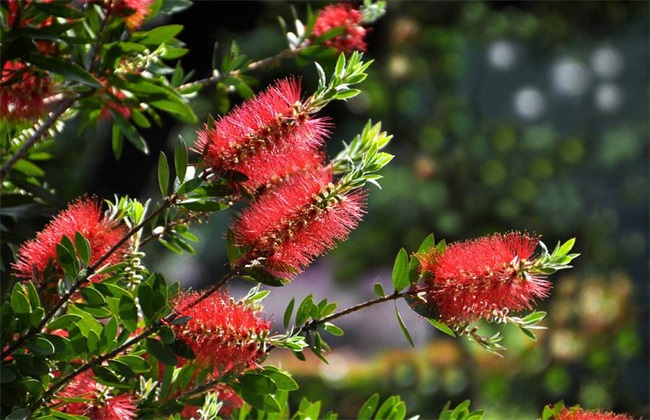
1. Propagation methods
The propagation method of red bottlebrush is generally mainly seed propagation, and cutting propagation can also be carried out. However, because the seeds of red bottlebrush are very small, sowing is also mainly done with small seeds. Around Qingming Festival each year, harvest the mature fruits, then take out the seeds and mix them thoroughly with fine sand. They can be directly broadcast without germination promotion. After broadcasting, cover with a layer of fine soil and water appropriately to maintain soil moisture. After about a month, they will germinate, and when they grow to about 1.2 m, transplant them.
2. Seedling lifting and planting
When lifting seedlings, the soil should be kept in a state of alternating dry and wet for transplanting with soil. When transplanting with soil, the soil block should mainly be cylindrical. After lifting the seedlings, promptly wrap the soil block with materials such as straw, paying attention to the force to avoid the soil block breaking apart and exposing the roots. Then prepare the planting hole completely, keeping the hole spacing at about 80*80 cm. And apply sufficient base fertilizer, mainly farmyard manure, at the bottom of the hole before planting, then cover with soil and compact it. The roots must not come into direct contact with the fertilizer. When planting, remove the wrapping from the soil ball and keep it level with the ground. Then fill with soil; there must be no gaps at the bottom of the hole, and water promptly after planting.
3. Water and fertilizer management
After planting, water about twice a day, each time making the soil layer thoroughly wet. Also spray water on the branches and leaves to provide sufficient moisture for the branches and leaves and reduce water evaporation. Especially when transplanting from June to September, the high-temperature environment will increase water evaporation, so the number of waterings should be appropriately increased. Then about half a month after planting, apply a light application of nitrogen fertilizer once, and about one month later appropriately apply organic fertilizer once. Then fertilizing about twice a year is sufficient. Finally, after the flowering period each year, be sure to carry out pruning once.
4. Reasonable pruning
Pruning is an indispensable task in cultivating red bottlebrush. Pruning work can create a good tree shape and improve the permeability and ornamental value of the tree body. Moreover, in the hot summer, because evaporation is very large, pruning work should be done even more carefully. About 1/3 of the branches and leaves of the plant should be cut off, especially the inner branches and some newly sprouted branches, to reduce the plant's water consumption. In addition, it can also inhibit the growth height of the plant's terminal branches, promote the sprouting of new branches, and increase the flowering rate.
The above is a brief introduction to the cultivation techniques for red bottlebrush. That is all for today's introduction. This article is for reference only, and I hope it can be helpful to everyone!