How do you grow Phalaenopsis orchids so they bloom abundantly and beautifully?
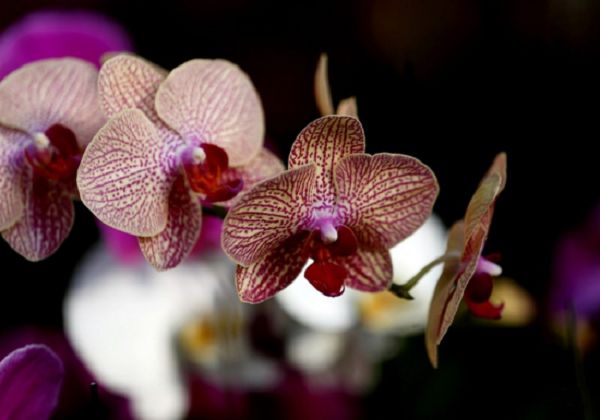
Caring for Phalaenopsis orchids and getting them to bloom abundantly is delicate work. A new Phalaenopsis plant must be grown for 3 years before it can form flower buds and produce brilliant flowers. The differentiation and formation of Phalaenopsis flower buds is mainly affected by temperature; it requires both a certain amount of accumulated heat and a short period of low-temperature treatment. After autumn arrives, low nighttime temperatures of 15-18°C are the condition that ensures flower bud differentiation. In addition, giving the young plants low-temperature treatment for 18 hours a day, continued for a month and a half, will form many flower buds. Once the flower buds have formed, the nighttime temperature can be kept between 18-20°C, and after 3-4 months they will bloom.
The flowering period of Phalaenopsis is fairly long. If the flower stalk is cut early and used as a cut flower, it can bloom a second time that same year. Phalaenopsis blooms at different times depending on the variety; generally each flower stalk can produce a dozen or so flowers, opening one after another from bottom to top, and a single flower can stay open for more than 1 month.
To encourage lush blooming, you can spray some liquid fertilizer on the leaves and roots during the growing season. In spring, fertilize once every 3-4 weeks. Stop fertilizing while in bloom, and after flowering you can fertilize once every 10 days. Fertilizing should focus mainly on liquid fertilizer with a relatively high phosphorus and potassium content, applied little and dilute each time. In summer, when Phalaenopsis grows vigorously, you can apply a solid organic fertilizer on the surface of the pot, then fertilize with liquid fertilizer once a week. After the weather turns cool in autumn, gradually reduce it, and by the end of October you can stop fertilizing.