How to water orchids correctly during illness
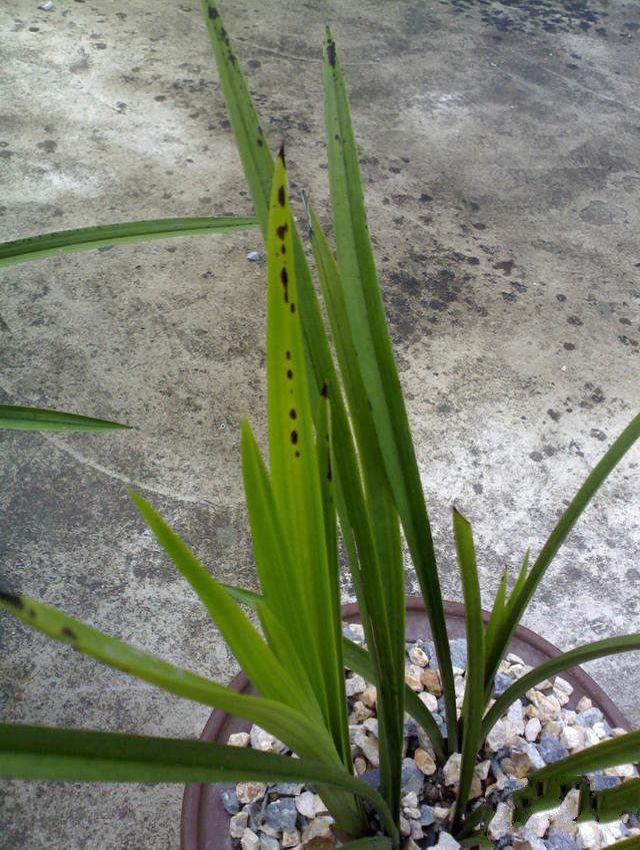
Watering orchids during illness is indeed somewhat different from during normal growth. Handling watering correctly helps the condition improve or eases the disease problem, and can also stop the disease from spreading quickly, giving us enough time to treat it with medication. If a sick orchid is still watered the same way as during normal growth, the harm is great: not only does the disease spread fast, but it also causes other new problems, with serious consequences. Regarding watering orchids during illness, I have the following suggestions.
1. Properly control watering frequency
Once an orchid is sick, its growth is bound to be affected, its metabolism slows down, and its need for water is lower, so watering should be properly controlled to avoid waterlogged potting soil causing root rot. Apart from this reason, many pathogens are more active in humid environments and reproduce faster. Controlling watering while an orchid is sick and keeping the potting soil slightly dry, especially keeping the surface a bit drier, can slow the reproduction and spread of pathogens, thus slowing the progression of the disease and buying us time to save the plant. Therefore, for an orchid during illness, watering must be properly controlled, and flooding irrigation must never be used.
Common misconceptions
After an orchid gets sick, many flower growers always feel that the illness is caused by not watering enough, or think that watering can quickly make the orchid fresh and lively again and eliminate pathogens, so instead of reducing watering they increase the watering frequency. These are all wrong practices. Especially in hot summer, when an orchid that has already developed disease is watered too much, it is difficult to save, the survival rate is low, and it is hard for later growth to recover.
2. Do not spray the leaves or the surroundings
After an orchid gets sick, apart from spraying medication (if the problem is not something like root rot but diseases such as leaf spot or stem rot), do not do any spraying on the leaves or the surroundings. There are three reasons: one has already been mentioned above - when the air is humid and the potting surface is very wet, pathogens easily reproduce and spread, their activity increases, and treatment becomes more difficult. Another is that many pathogens spread quickly with water mist, causing healthy orchid leaves to become diseased in a short time. The third is that an orchid during illness has very poor resistance; when spraying, the mist condenses into droplets that flow into the leaf core, which can easily cause the leaf core to rot and thus cause more serious problems.
Common misconceptions
When an orchid is sick, its leaves are mostly listless, looking droopy, with weaker gloss and paler leaf color. At this point growers get anxious and can't help wanting to spray to increase air humidity and improve the leaves' color and luster. Little do they know that doing so provides a shortcut for pathogens to spread quickly and makes them more and more active, breeding more descendants to harm the orchid. So when caring for a sick orchid, keep your hands off!
3. Water close to the potting surface
During illness, orchids should be watered even more closely to the potting surface, and water and mud should not splash onto the leaves. For a healthy growing orchid, water and mud remaining on the leaves for a long time may still leave spots; during illness, resistance is weaker, so the possibility of leaving spots is even greater. In addition, when watering a sick orchid, water along the edge of the pot; if you worry it won't soak through, you can water again after about five minutes.
Common misconceptions
Some growers still pour a ladle of water right over the top after their orchid gets sick. When an orchid is healthy, with good ventilation and good resistance, watering over the top may not be a big problem, but during illness watering over the top is highly inadvisable. In addition, some growers are used to watering orchids with a fine, slow trickle, and still water this way after the orchid gets sick. This has the same harm as spraying the leaves, accelerating pathogen reproduction and spread, and is also inadvisable.
4. Do a good job of ventilation and shading
No matter what disease the orchid has, after watering during illness be sure to ventilate more, so that excess water in the pot evaporates quickly and the potting surface and leaves stay dry; otherwise it is very unfavorable for recovery. Even after each spraying of medication, ventilation should be strengthened. Besides ventilation, a sick orchid has poor resistance, so shading should be slightly stronger; it must not receive long periods of direct sunlight or strong sunlight exposure.
Common misconceptions
Some growers, after their orchid gets sick, increase light, thinking this can kill the pathogens by sun exposure. Indeed, when light is strong, pathogen activity weakens and reproduction slows, and some may really be killed by the sun. But while killing pathogens with sunlight, it is also very likely to sunburn or kill the orchid. More ventilation combined with medication can achieve twice the result with half the effort. Some orchids, after getting sick, can even recover on their own with careful care in a well-ventilated place without medication.
Summary of the problem
During illness, orchids should have their watering frequency properly reduced, keeping the potting soil on the drier side, so as to keep the roots breathing freely while lowering pathogen activity and spread speed. When caring for a sick orchid, stop spraying the leaves and surroundings, ventilate more, provide appropriate shading, and water close to the potting surface, avoiding direct contact between the leaves and pseudobulbs and water.