Treatment methods and care points after Eustoma grandiflorum blooms
Eustoma grandiflorum (lisianthus) is a type of flowering plant that not only has high ornamental value but also many beneficial effects. It is loved by many people, so the planting area of Eustoma grandiflorum in our country is currently quite large. When growing Eustoma grandiflorum, management work is very important. This is especially true after flowering, so how should Eustoma grandiflorum be handled after blooming? Below, the editor will briefly introduce this for everyone. Let's take a look together!
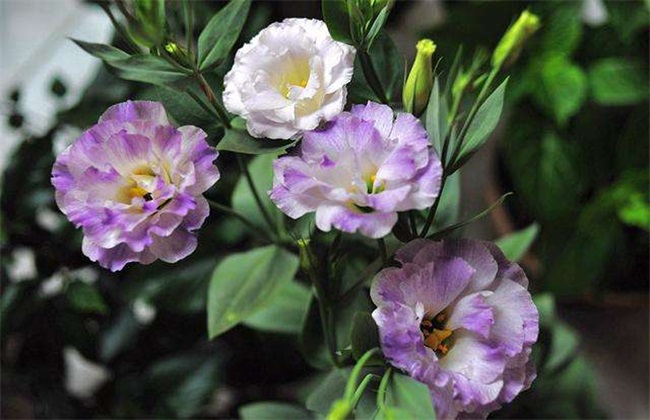
1. Timely pruning
When Eustoma grandiflorum blooms, it needs to consume a large amount of nutrients. Therefore, in order to ensure the nutrition of Eustoma grandiflorum during the flowering period, some spent flowers, old leaves, and yellow leaves should be pruned away in time during the flowering period. Concentrate the nutrients on the healthy flowers. In addition, some branches that are too long, too dense, leggy, or affected by pests and diseases should also be pruned away. The growth value of these branches is relatively small, and they also consume a large amount of nutrients. Moreover, after pruning them away, the plant's ventilation and light penetration can also be improved, further enhancing the growth ability of Eustoma grandiflorum.
2. Temperature control
Eustoma grandiflorum has relatively high temperature requirements, especially during the flowering period, when it is very sensitive to temperature changes. After Eustoma grandiflorum blooms, the temperature should be controlled at around 16-22°C. A suitable temperature can increase the flowering rate of Eustoma grandiflorum and delay the flowering period. Therefore, in summer, because the temperature is relatively high, cooling work should be done well. Similarly, in winter when temperatures are low, cold protection and heat preservation work should be done well. If the temperature is too low, Eustoma grandiflorum may suffer cold damage, resulting in an inability to grow normally.
3. Reasonable watering
After Eustoma grandiflorum blooms, we should do a good job of watering. Reasonable watering can ensure the flower quantity of Eustoma grandiflorum. The soil should follow the principle of watering when dry and stopping when wet. If the soil moisture content is insufficient and relatively dry, then water in time to keep the soil in a relatively moist state. However, attention should also be paid to controlling the amount of watering; do not water too much. If excessive watering causes water accumulation in the soil, then the roots of Eustoma grandiflorum will rot as a result. This affects the root's growth ability and absorption ability. At the same time, attention should also be paid to controlling the water temperature, especially in winter, when the water temperature should be close to the soil temperature.
4. Proper fertilization
As just mentioned, Eustoma grandiflorum needs to consume a large amount of nutrients when blooming. Therefore, during the flowering period of Eustoma grandiflorum, we should also pay attention to doing a good job of fertilization to provide sufficient nutrients for Eustoma grandiflorum to bloom. During the growing season of Eustoma grandiflorum, a thin liquid fertilizer should be applied once a month to ensure sufficient nutrients. In winter, in order to allow Eustoma grandiflorum to overwinter normally, a fully decomposed farmyard manure can be applied once before overwintering. Control the amount of fertilization well to avoid fertilizer damage caused by excessive fertilization. This is very beneficial to the growth of Eustoma grandiflorum.
The above is a brief introduction to how to handle Eustoma grandiflorum after it blooms. That is all for today's introduction. I hope it can be helpful to everyone!