What to Do After Phalaenopsis Orchid Flowers Finish Blooming? A Detailed Guide to Flowering-Period Care
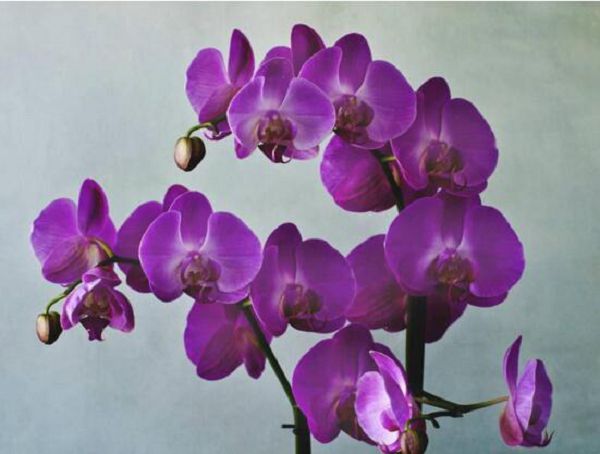
Phalaenopsis is a typical plant that blooms twice per season. After the first bloom finishes, trim the roots, and at the same time pay attention to watering, maintain light and temperature, and after it recovers it enters the second flowering period. What to do after both Phalaenopsis blooms have finished? Simply cut off the flower stalk. If you are planning to propagate, then do not cut it; care for it carefully until small buds appear, and then you can carry out flower-stalk propagation or stem-cutting propagation.
I. After Phalaenopsis flowers finish blooming, trim the roots and wait for it to bloom again
When Phalaenopsis blooms, it looks like a beautiful butterfly dancing, very lovely. Phalaenopsis can bloom twice a year, and on the same flower stalk. Ordinary flowers wither along with their flower stalk after blooming once; but Phalaenopsis is different, and will bloom twice on the same flower stalk. Therefore, after each bloom finishes it needs careful care. What to do after Phalaenopsis finishes blooming? After the first bloom finishes, care for the plant and wait for the second; after the second bloom finishes, simply cut off the flower stalk.
After the Phalaenopsis finishes blooming for the first time, keep the flower stalk well, pull the plant out of the pot, check the roots for rot and disease, trim unhealthy roots, and by the way check the sphagnum moss and replace it promptly once it has deteriorated, then care for it normally and wait for the second bloom.
After the second bloom finishes, it will not bloom again that year. At this point you can cut off the flower stalk so that nutrients are concentrated in supplying the plant, and wait for the flowering period to come the following year.
II. Care during the Phalaenopsis flowering period 1. Suitable temperature
Phalaenopsis has high temperature requirements for growth, and even more so during the flowering period. For the temperature during the Phalaenopsis flowering period, 23°C to 25°C during the day and 15°C to 18°C at night are suitable; this temperature difference can very well nurture flower buds. If the temperature is too high, it will cause the flowers to wither prematurely; if the temperature is too low, it will freeze and damage the flower buds and affect development. Also, in dry autumn you can spray water on the flowers to maintain humidity.
2. Control the amount of water
During the Phalaenopsis flowering period, the water required is less than usual, especially less than in summer; keeping the soil in a moist and warm state is enough. With too much water, the leaves become wrinkled and yellow, the flower buds grow small, and the flowers that open are small and dull in color; with too little water and excessive dryness, the leaves become wilted and lusterless.
3. Sufficient light
Before Phalaenopsis blooms, it needs strong sunlight so it can carry out photosynthesis better, and the flowers that open are bright in color and full in shape. At the same time, maintain ventilation so it can take in more carbon dioxide.
4. A small amount of fertilizer
In the late growth stage of Phalaenopsis, before the flowering period arrives, the nutrients in the plant body have already been stored up. During this period no fertilizer is needed; you can apply a small amount of phosphorus and potassium fertilizer to supply the flowers and make them more beautiful.
III. Phalaenopsis propagation methods 1. Flower-stalk bud forcing propagation
After Phalaenopsis finishes blooming, small buds will grow on the flower stalk. If these small buds are cut off and planted, they will grow into new plants. Therefore, the flower stalk of Phalaenopsis is a seedbed for cultivating young plantlets. However, since Phalaenopsis blooms twice a year, it often does not grow small buds. At this time we can force buds artificially.
Artificial bud forcing is carried out after the Phalaenopsis flowers fade. First remove the spent flowers, disinfect the flower stalk, then remove the bracts between the first three nodes, apply a catalyst to the exposed small buds, and place it in a shaded place at 25°C to 28°C. After about 20 days the small leaves will grow larger, and after about 3 months several leaves will have grown and the roots will also be well developed, so you can simply cut it off and plant it.
2. Stem-cutting propagation
Stem-cutting propagation is carried out during the growth period of Phalaenopsis; apply more fertilizer to make the plant grow taller and larger, then use sterilized scissors to cut off the stem and leaves with roots for planting.