How to care for orchids in spring? These care methods you need to learn
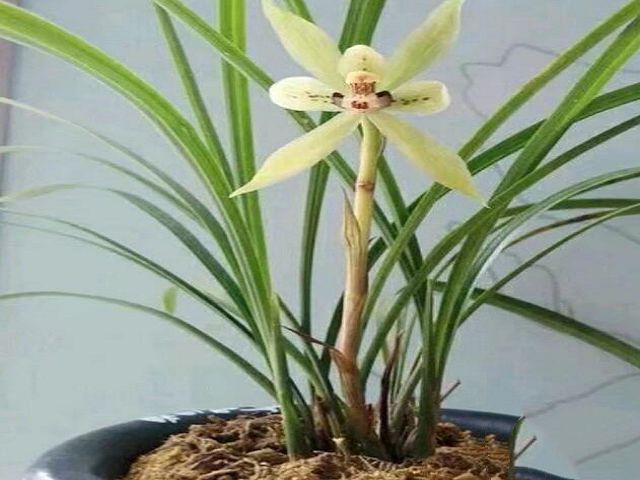
Key points of spring orchid care: do not take them outdoors in spring; keep plants moist, water heavily; ventilate frequently; repot and prune as the plant's condition requires, and supplement nutrients accordingly; adjust insect and fungus prevention with temperature changes. If orchid growers carefully comprehend these words, they will naturally understand their meaning, as they already contain the major key points of spring orchid care.
1. Taking them outdoors should depend on the local temperature, and you should not simply follow what is written. Temperature differences between north and south vary, and the north has late spring cold snaps, so taking them outdoors should be later than in the south. The orchid-growing world's saying "do not take them outdoors in spring" refers to the north. In the north, it is recommended to take them outdoors after Qingming when the temperature stabilizes above 18~20 degrees. First, to prevent late spring cold snaps; second, to avoid the negative effect on growth from taking them out too late.
Do not rush when taking them outdoors. Orchids are sensitive to sudden environmental changes and must first adapt in advance. Outdoor ventilation and light cannot be compared with the indoor environment that has been stuffy all winter. Therefore, you should first open the windows in advance for a few days to let the orchids adapt before taking them outdoors, giving the plants a gradual adaptation process.
2. Keep plants moist, water heavily: in early spring the temperature is still unstable, mostly on the low side, and some orchid varieties are still dormant. Water transpiration remains slow, and the demand for water is not great, so watering should still follow the rule of not watering until dry. But for spring orchids about to bloom and cymbidiums that have already formed buds, watering should be slightly more frequent according to need. After flowering, water less to prolong the flowering period. After the flowers fade, control water appropriately, keeping the potting soil preferably moist. Wait until the temperature rises and stabilizes, that is, when wearing winter clothes no longer feels comfortable and you must take off layers, then you can increase watering. But increasing only means that the potting soil transpires faster and watering frequency should increase, not that you should keep the potting soil constantly wet. Too much water will definitely rot the roots.
3. Ventilation: when the temperature rises to 20 degrees, fungal diseases and insect pests begin to become active. Indoors with windows closed, people already find it uncomfortable to breathe, and orchids even more so. At this time, you should increase the frequency of opening windows for ventilation (still avoid it on cloudy days, rainy days, or when cold wind blows), and sunny days are preferable.
4. Bathe in spring sunlight, and all things grow. Spring sunlight makes people lazy and cozy, and even more so for plants. Spring sunlight contains activators and growth elements that stimulate all living things awakening from spring dormancy, and this is also why plants sprout in spring. Therefore, spring light must never be ignored. If you can expose them to more, ensure it is enough.
5. Spring is the best season for repotting, tidying roots, and pruning. Divide the clumps when they should be divided, and supplement nutrients when they should be supplemented. Note that spring orchids, cold orchids, and cymbidiums are clump-forming, so division should preferably be into groups of 3 or more shoots. When fertilizing, keep firmly in mind: indoors in winter, orchid plants inevitably show some disease symptoms, so fertilizing should be done only when roots are good and seedlings are strong; do not fertilize when roots are damaged and seedlings are poor. The principle for topdressing is to prefer less over more, and prefer dilute over concentrated. Orchid roots have just awakened and are still drowsy, so remember never to fertilize heavily.
6. Spring from March to May is the period when pests and diseases begin to break out. This is true not only for orchids, but for all indoor flowers as well! When the temperature is above 16 degrees, start checking the plant body for pests and diseases, and do not overlook the potting soil either. Above 25 degrees, there may be phytotoxicity reactions caused by high temperature, so spraying is best done in the morning and evening. When spraying, it is best to open the windows. Any phytotoxicity has a pungent and harmful odor that can harm those without protective equipment. I once had an experience when root-drenching with Huabikang without wearing a mask, and I immediately felt dizzy with an itchy, dry, and painful throat, almost fainting. The place most harmed by this type of medication is the throat.