Detailed Explanation of Key Technical Points for Cage Fish Farming in Reservoirs
In recent years, cage fish farming has become increasingly popular in China. Cage fish farming can reduce the waste of land resources and does not compete with farmers for land or water. It can also increase the fish's nutrient absorption by restricting their movement and increasing the amount of bait fed. Moreover, cage fish farming is not limited by water bodies, and the most common type now is cage fish farming in reservoirs. So today, the editor brings you the technology for cage fish farming in reservoirs. Let's take a look together!
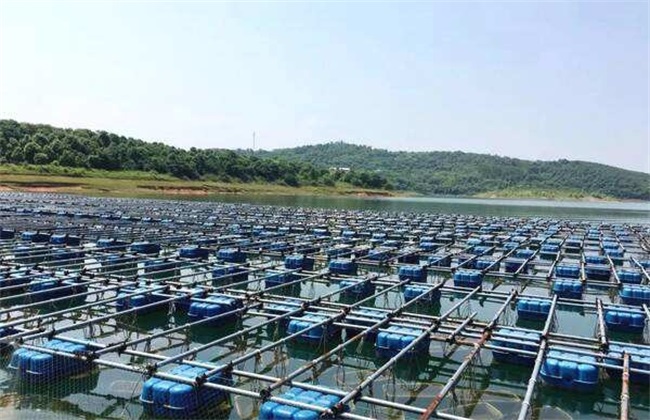
1. Reservoir Requirements
When carrying out cage fish farming in reservoirs, we first need to choose a good reservoir. The reservoir must ensure sufficient sunlight and good wind shelter, which can provide ample light for fish growth and enhance their growth capacity. There must also be good transportation around it, to facilitate the transport of fish to market after they are caught. The nutrient level of the reservoir water body also has a certain impact on farming benefits, so it is also necessary to ensure it is nutrient-rich. At the same time, pay attention to the water area and depth; the water level of the water area should not change too much, to avoid the cages being unable to withstand it. It is also inconvenient for placing and removing the cages.
2. Cage Placement Area
After choosing the reservoir, we also need to mark out an area in the reservoir as the cage placement area. The cages should be placed in a place with a broad water surface, slow water flow, uniform light exposure, small water level changes, and suitable water depth. If the water level is too shallow, it will affect the exchange of the water body and is not conducive to fish growth. However, it should not be too deep either; if it is too deep, a thermocline is likely to form in the water body, thereby damaging the water body and causing fish to gasp at the surface. Therefore, the water depth should be controlled at about 7.5 m. Finally, the cages must not be too close to the shore, to prevent being bitten and torn by rats and other creatures, which would cause the fish to escape.
3. Cage Design
After making preparations, we need to design the cages. The shape of the cages can be designed as square, round, and various other shapes according to one's own habits. Then control the area of the cages according to the farming quantity; the cage area can also be set according to one's own habits. When placing the cages, the placement depth should be determined according to the farming water body. However, note that the cages must never touch the sludge at the bottom of the reservoir, and they must also not touch it during the dry season. Finally, control the mesh size well; the mesh must ensure the fish cannot escape. Under normal circumstances, the mesh should be about two times longer than the fish body length, while the circumference should be smaller than the fish.
4. Key Technical Points
When setting up the cages, we should also try to ensure that there is abundant natural bait around them. Then choose a cage structure and installation method that suits you; when placing the cages, pay attention to the arrangement method and the distance between each cage, etc. Then choose the fish species to farm according to the water body, and control the stocking size, farming density, and polyculture ratio, etc. Ensure that the production performance of the water body can be fully utilized. Finally, do a good job in various management tasks such as fish feeding, escape prevention, and disease prevention. Regularly clean the cages and check the mesh, etc., to ensure normal fish growth.
The above is a brief introduction to cage fish farming technology in reservoirs. That is all for today's introduction. This article is for reference only, and we hope it can help everyone!