How to grow clematis? A full breakdown of cultivation methods and precautions
Clematis, also known as leather flower and passion flower, is an evergreen herbaceous climbing plant in the buttercup family (Ranunculaceae). It is grown on a large scale in China, and it not only has high ornamental value but also has various medicinal effects such as promoting urination and regulating qi to relieve constipation, with the main medicinal parts being the roots and the whole plant. So how should clematis be grown? Below, the editor brings you the cultivation methods for clematis, so let's take a look!
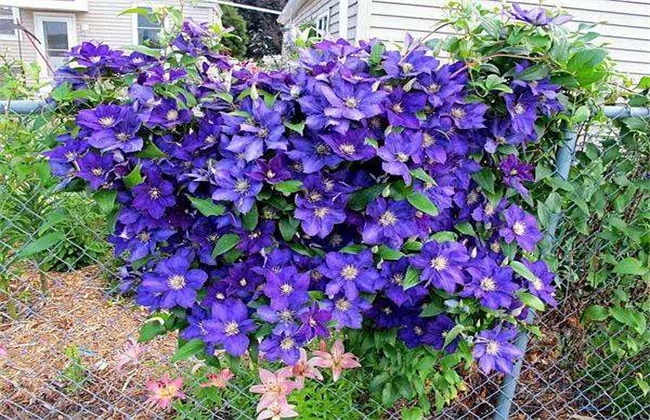
1. Propagation methods
Clematis propagation is mostly based on sowing seeds. Sowing can be done in spring and autumn. When sowing in spring, first soak the seeds in warm water at about 40 degrees for around one day. Then take them out and air-dry them for moist stratification to promote germination. Once most of the seeds show white sprouts, they can be sown. If sowing in autumn, the seeds do not need to be pre-germinated and can be sown directly into the field. Autumn sowing is usually around November, and under normal conditions seedlings emerge the following spring. Compared with spring sowing, autumn sowing produces faster emergence and a higher rate of uniform seedlings.
2. Land preparation and transplanting
Before transplanting clematis seedlings, we must do a good job of land preparation. The transplant site should be chosen in a place with higher terrain, normal drainage and irrigation, and a certain degree of shade. Prepare the soil finely to ensure a level terrain, then break the soil up into small pieces. Next, make beds and ridges, dig the planting holes, and keep the depth of the planting holes at about 45 cm. A suitable amount of stones and rubble should be placed at the bottom to improve drainage capacity. Then dig out the clematis seedlings intact and transplant them with the soil ball. Then water thoroughly, and build a soil ridge about 15 cm high around the planting hole to make watering easier. After that, the soil should mainly be kept alternating between dry and moist.
3. Water and fertilizer management
Clematis is very sensitive to water, and the soil moisture content must not be too much or too little. Especially during high temperatures in summer, the soil must not be too wet. During the growing period of clematis, water about once every 3 days. After clematis enters dormancy, just keep the soil moist. Note that the soil must not accumulate water, otherwise it will seriously affect the growth of clematis. Then in February to March, when clematis sprouts new shoots, apply an appropriate amount of nitrogen, phosphorus and potassium fertilizer in a 3:1:1 ratio to speed up the growth rate of clematis. Then apply an appropriate amount of phosphate fertilizer during the flowering period to promote flowering. Also, apply an appropriate amount of water-soluble fertilizer normally to provide sufficient nutrients for the growth of clematis.
4. Daily care
When caring for clematis, temperature control is very important. The temperature should not be too high or too low; the daytime temperature should be kept at about 22 degrees and the nighttime temperature at about 16 degrees. In summer, if the temperature exceeds 35 degrees, it will cause adverse phenomena such as yellowing leaves and leaf drop in clematis, so be sure to cool it down in time. On the contrary, in winter, good insulation and cold protection work should be done. Then pay attention to light. Light also has a very large impact on the growth of clematis. Maintain about 6 hours of light per day, which is beneficial to the growth of clematis.
The above is a brief introduction to clematis cultivation methods. That is all for today's introduction. This article is for reference only, and I hope it can help everyone!