What soil is suitable for clivia? Can willow bark be used in the soil mix?
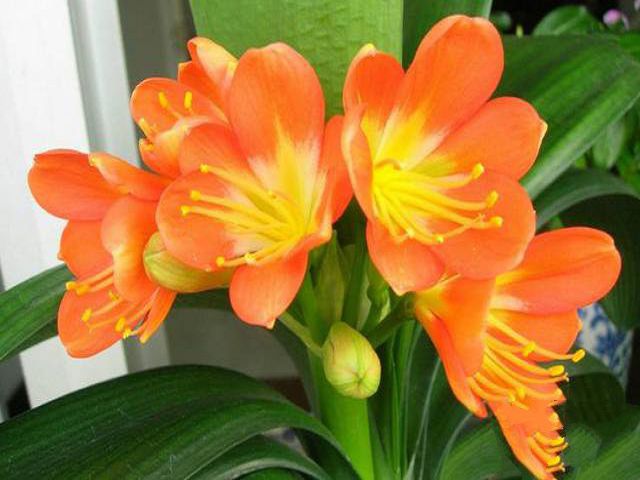
Clivia has thick, white fleshy roots, so it must be planted in loose, breathable soil. Otherwise, if the soil becomes compacted and waterlogged, the roots will easily rot. Generally, when planting, peat soil granules, clay pebbles and the like are used to make a soil mix that is both nutritious and very well draining. Planting in this way works very well.
Of course, if you have bark on hand, willow bark, pine bark, or the bark of other trees can all be used. But these barks must be thoroughly fermented before use; do not use fresh, unfermented bark. If you use it, after watering the bark will ferment inside the potting soil, and fermentation generates heat, which will burn the roots. It is also not advisable to plant directly in pure bark. When using bark, you can add some clay pebbles, some peat soil granules, coconut coir and the like, all of which are fine. This way the mix is both loose and breathable and has some water-holding capacity, so water will not just run straight through after watering and leave the potting soil with no moisture.
In fact, mixing soil for clivia is very flexible. Bark is an excellent medium; it is very good for growing orchids and for growing plants with fleshy roots like clivia, but it must be well fermented before use.
Of course, on many platforms, including in videos, we have seen that many greenhouses growing clivia use leaf mold soil. Leaf mold soil has a certain degree of breathability and drainage, but its water absorption and retention are also very good. If you use pure leaf mold soil at home, when ventilation is poor, the soil will not dry for a long time after watering, which easily causes root rot. So it is not recommended to use leaf mold soil for indoor planting. If your ventilation is good, you can use leaf mold soil. If your ventilation is poor, you can directly mix bark, clay pebbles and peat soil granules in a 1:1 ratio, and I guarantee your clivia's roots will fill the pot, white and strong.
Once the roots grow well, the leaves will grow large and thick. You only need to water regularly and fertilize regularly, and your clivia will absolutely not develop root rot; it will only grow very quickly.