Why does overwatering orchids cause root rot?
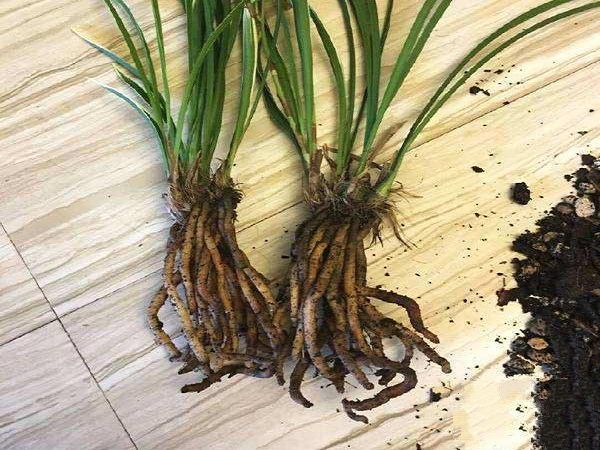
If the potting medium is still very moist two days after a thorough watering of an orchid, whether it will cause root rot depends specifically on the potting medium used and the care environment. If the potting medium holds water well but also drains and breathes well, and there is no problem with ventilation, there is no fear of root rot. If the potting medium holds water well but drains and breathes poorly, and ventilation is also poor, root rot easily occurs and attention is needed.
Orchids like moisture but fear waterlogging. Generally speaking, as long as there is no problem with the potting medium, there is no waterlogging, and ventilation is good, root rot due to overwatering basically will not occur. This is because when a lot of water is given, it quickly drains away, there will be no waterlogging in the pot, and with good ventilation the excess water in the potting medium will also evaporate as quickly as possible, the roots have sufficient oxygen supply, and normal root activity is not affected. So why does overwatering and root rot always occur in the daily process of growing orchids? I think there are mainly three reasons:
1. Poor drainage and aeration of the potting medium
If the potting medium for growing orchids is too soft, or too sticky with poor drainage and aeration, after watering the potting medium stays too wet and there may even be waterlogging in the pot or at the bottom of the pot. If orchid roots stay in this overly humid environment for a long time, they will begin to rot, which shows on the leaves as blackened leaf tips that gradually spread downward. Orchid roots rot in a humid environment: on one hand, overly wet potting medium leads to insufficient oxygen supply to the roots, causing cell death from hypoxia; on the other hand, electrolyte imbalance in the orchid roots causes cell death and thus rot. So when growing orchids you must choose a good potting medium, and try to use more coarse medium and less fine medium, so that even if you accidentally overwater, the chance of root rot will be greatly reduced. If the chosen potting medium is mainly fine medium with a small amount of coarse medium mixed in, the difficulty of watering will be greatly increased and the chance of root rot will also increase. When using a relatively large amount of coarse potting medium to grow orchids, you should keep the medium a bit on the moist side, otherwise the orchid roots may become hollow due to insufficient water supply.
2. Poor ventilation
Another reason orchids easily get root rot is poor ventilation. Orchids like an environment with good air circulation. Outdoor-grown orchids are not prone to root rot even if the potting medium is not very good, while indoor-grown orchids, even if the potting medium is carefully selected, still have a relatively high chance of root rot if ventilation is neglected. Especially in hot summer, the difference between frequent ventilation and no ventilation is huge. The reason is that frequent ventilation can carry away excess water in the potting medium as quickly as possible, the roots have sufficient oxygen supply, and root cells are less likely to die. When ventilation is poor, the potting medium stays too wet for a long time, the oxygen content in the medium particles is insufficient, and the root system quickly rots in this humid, stuffy, oxygen-poor environment, causing poor growth of the orchid plant. So in the process of caring for orchids, ventilation is very important, especially after each watering, ventilate promptly to let the water in the potting medium evaporate a bit and ensure the roots are not suffocated.
3. High bacterial content in the potting medium
The potting medium for growing orchids is generally required to undergo sterilization treatment to reduce the content and types of various bacteria and ensure the safety of the orchid roots. If the potting medium has a relatively high bacterial content, under long-term moist and warm conditions, bacteria will multiply in large numbers and attack the orchid roots. If at this time the orchid roots have poor resistance, or themselves have wounds, the bacteria will take the opportunity to invade, destroying the original ecosystem of the orchid roots, causing root rot and poor growth. Especially in hot summer, various bacteria are very active and their reproductive capacity is also very strong. It is relatively dangerous for orchid potting medium to stay too wet for a long time. Maintaining a slight dryness makes bacteria lose the conditions for reproduction and reduces their activity, and the chance of orchid root rot will decrease accordingly.
How to handle overly wet potting medium
When we find that the potting medium for growing orchids has been overly wet for a long time, we need to do two things: one is ventilation, preferably 24-hour ventilation, to let the water in the potting medium evaporate as quickly as possible. Note that in summer, when the potting medium is too wet, absolutely do not expose it to strong sun, as this will greatly increase the chance of root rot and also sunburn the leaf surface. You can expose it to the sun in the morning and afternoon when the light is weak, which helps somewhat with drainage. The other is that if there is something like moss covering the surface of the orchid pot, remove it to increase the speed of water evaporation. If the orchid potting medium has poor drainage and aeration, it is recommended to replace it promptly when the temperature is suitable, and do not delay. The longer you delay, the greater the risk. In addition, adjust the method and manner of watering orchids, reduce watering frequency, and lower the risk of root rot.
Summary: An orchid potting medium being on the moist side does not necessarily cause root rot; it is mainly related to the drainage and aeration of the potting medium, ventilation conditions, and the bacterial content of the potting medium. When the orchid potting medium is on the moist side, ensure effective ventilation time, and at the same time remove the top dressing on the pot surface to increase evaporation. If the potting medium stays on the moist side for a long time after every watering of the orchid, it is recommended to replace the potting medium when the temperature is suitable to reduce the risk of root rot.