How to propagate Globe Amaranth? A detailed explanation of the propagation methods
Globe Amaranth is a very common flowering plant in China, with a long flowering period, bright and beautiful flowers, and high ornamental value. Therefore, it is very popular in China. At present, the area planted with Globe Amaranth in China is also relatively large, and when planting Globe Amaranth, propagation work is very important. So how should Globe Amaranth be propagated? Today, the editor brings you the propagation methods of Globe Amaranth. Let's take a look together below!
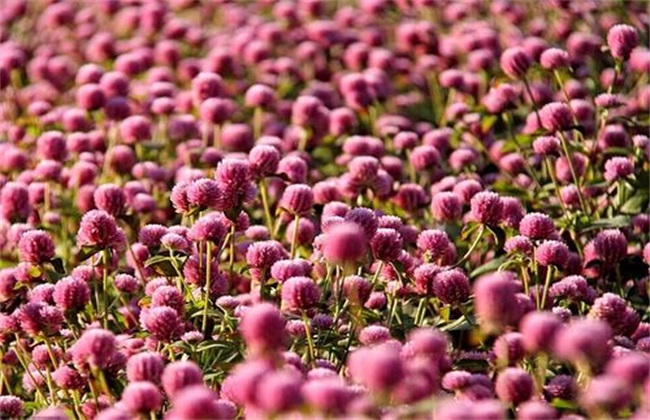
I. Seed propagation
1. Seed collection and soaking
When propagating Globe Amaranth by sowing, we must first do a good job of seed collection. Seed collection should begin in September each year, and after collection, sowing should be carried out around Qingming Festival the following year, and planting out can be done in June. However, because Globe Amaranth seeds have a lot of fuzz, the seedling emergence speed is relatively slow. Therefore, in order to increase the seedling emergence speed of the seeds, before sowing we also need to do a good job of soaking the seeds to promote germination. Before sowing, soak the seeds in warm water for about 1-2 days. Then remove the seeds and air-dry them, then wrap them in a wet cloth and place them in a warm place to promote germination.
2. Sow at the right time
When most of the seeds have broken white, they can be sown. Because Globe Amaranth seeds are relatively large, we can directly sow the seeds in ordinary sowing beds. However, the sowing bed must ensure good sunlight, good drainage and irrigation, and loose soil, and after sowing, cover with an appropriate amount of soil and control the temperature well. When all the seedlings have emerged and the stand is complete, thinning should be done well. During the seedling growth period, the amount of water and fertilizer should be controlled well and must not be excessive, to prevent excessive vegetative growth of the seedlings. And during the seedling stage, pinch once for dwarfed cultivation.
II. Cutting propagation
1. Cutting method
The time for cutting propagation is generally in July. First, we should choose cuttings about 5 cm long and retain about 4 nodes. Then cut off the leaves on the nodes that need to be inserted into the soil, to avoid excessive water evaporation. After cutting, the temperature should be controlled at about 25 degrees, and after about 20 days they can take root and be transplanted. If the temperature is lower than 20 degrees, then the number of days needed for the cuttings to take root will be delayed by about a week. However, if you want to advance the rooting time, then we can apply an appropriate amount of rooting agent to the base of the cuttings. The effect of the rooting agent is relatively obvious, and generally about a week after cutting they can be transplanted.
2. Management after cutting
Before the cuttings are inserted, be careful to water the soil thoroughly, to avoid injuring the cuttings during insertion and to improve the survival rate of the cuttings. Then pay attention to the cutting depth; inserting about one node of the cutting is enough. After cutting, water promptly to increase the contact area between the cuttings and the soil. Then keep the soil moist every day, and do a good job of shading and sun protection. Especially in summer, the shading rate of the seedbed should be maintained at about 85%, and in seasons with weak light such as spring and autumn, it can be appropriately reduced.
The above is a brief introduction to the propagation methods of Globe Amaranth. That is all for today's introduction. This article is for reference only, and I hope it can help everyone!