How to grow Eustoma (Lisianthus)? Detailed Guide to Growing Methods and Precautions
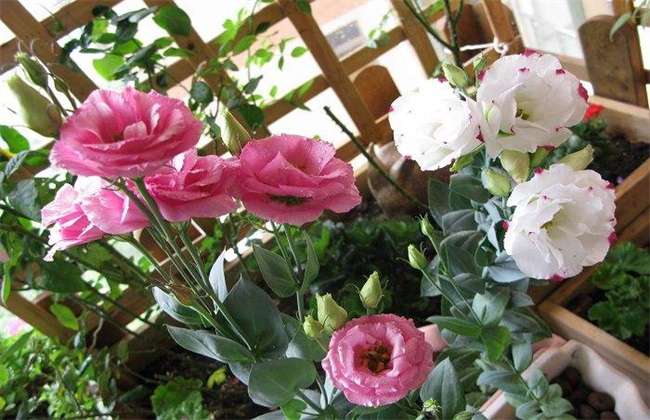
Eustoma is a perennial plant of the Gentianaceae family, and it is fairly widely distributed in our country. Eustoma has a graceful plant shape, elegant flower colors and a fresh floral fragrance, giving it very high ornamental value. It is very suitable for flower arranging, cut flowers and so on, and is loved by many people. So how should Eustoma be grown? And what precautions are there? Below, the editor brings you the growing methods and precautions for Eustoma. Let's take a look!
1. Soil Selection and Sowing
Although Eustoma does not have very high requirements for soil, it can grow better in soil that is highly permeable, loose and rich in humus. If grown in pots, you can choose peat, perlite and other materials to mix into potting soil, and the soil should be disinfected well before planting. Then choose the right variety according to the planting season; if planting in spring or autumn, choose early-maturing varieties. Before sowing, the seeds should be coated, because the seeds are relatively small and like light, so no soil cover is needed when sowing. Keep the temperature at around 25°C, and they will germinate in about half a month. About half a month after germination, carry out thinning and seedling separation.
2. Water and Fertilizer Management
When growing Eustoma, we must do a good job of watering. However, be sure to control the amount of water, because Eustoma has a very large need for water, and many people sometimes water heavily to meet its water needs. This leads to excessive application, affects the roots, causes root rot and even triggers pests and diseases. Therefore, we should control the amount of watering according to changes in climate and temperature, and must not water too much. Eustoma does not have a great demand for fertilizer; generally, some low-concentration calcium nitrate liquid fertilizer can be applied. Pay attention to the amount of nitrogen fertilizer, which must not be too much, otherwise it is easy to produce too many branches and cause phenomena such as burnt tips and split stems.
3. Temperature Control
Eustoma seeds will emerge from the soil about half a month after sowing. At this time, we should pay attention to controlling the temperature well. The suitable temperature for the growing period of Eustoma is around 16-25°C. The daytime temperature must not exceed 25°C, and at night it should also be kept at around 10°C, otherwise the growth of Eustoma will be seriously affected. During the seedling stage, Eustoma grows relatively slowly, so be sure to control temperature and humidity well. Avoid high-temperature and high-humidity environments, which cause Eustoma to grow leggy and trigger various diseases. Then also control the light intensity well; the light must not be too weak.
4. Precautions
When caring for Eustoma, temperature is something we need to pay special attention to; the temperature must never be too high. And in order to improve the ornamental value of Eustoma flowers, after the flowers fade each year, the flower stems should be heavily pruned once, so as to increase the plant's flowering rate the next year. Then we should also pay attention to doing a good job of pest and disease prevention and control, such as stem blight, gray leaf spot, leafminer, etc. Do a good job of daily management, strengthen ventilation and light transmission, and control planting density well. When topdressing, the proportion of phosphorus and potassium fertilizer can be appropriately increased to enhance the plant's disease resistance.
The above is a brief introduction to the growing methods and precautions for Eustoma. That is all for today's introduction. This article is for reference only, and I hope it can help everyone!