How to Propagate Lisianthus by Cuttings? Learn the Specific Method in One Article
Lisianthus (Eustoma) is very popular in our country, so its planting area is now very large as well. When growing lisianthus, propagation work is indispensable. In fact, besides seed propagation, lisianthus can also be propagated by cuttings. However, because many people use the wrong cutting methods, the survival rate is relatively low. So how exactly should lisianthus be propagated by cuttings? Today, the editor brings you the cutting method for lisianthus. Let's take a look!
1. Selection of Cuttings
Before taking cuttings from lisianthus, we must first select good cuttings. The cuttings should be selected from branches on the lisianthus plant with strong meristematic capacity; preferably, after the lisianthus has jointed, choose the stem below the heart leaf. The branches must be guaranteed to be free of wounds, free of pests and diseases, and grow vigorously. Do not choose overly tender stems, because tender stems have not yet fully matured. They also require a great deal of vegetative growth, which not only increases cultivation costs but also results in a relatively low survival rate. Therefore, the selection of cuttings is very important. If possible, it is best for the cutting to have only two leaves, as this will also give a higher survival rate.
2. Treatment of Cuttings
After selecting the cuttings, cut them diagonally into small sections. Each small section must retain a pair of leaves, and the diagonal cut is mainly to increase the meristematic tissue area at the cutting site. Then cut off about 1/2 of the leaves on each small section to avoid consuming too many nutrients. This is because at the time of just taking the cutting, there are no roots, so there is no nutrition to speak of. The growth nutrients are all stored in the cutting beforehand, so cutting off 1/2 of the leaves can reduce nutrient consumption and increase the rooting rate. However, note that the leaves must not be completely removed, otherwise the cutting cannot carry out photosynthesis, and the lack of nutrients will cause the cutting to fail.
3. Preparation of the Substrate
The substrate for lisianthus is also very important; the cutting substrate directly determines the survival rate of the lisianthus cuttings. The cutting substrate should be kept in a slightly alkaline state, with the PH value controlled at around 6. It can be prepared with materials such as peat and vermiculite, then add some carbendazim for disinfection to avoid carrying pathogens that affect the normal growth of the cuttings. Then, before cutting, be sure to water the substrate appropriately so that it is in a moist state, which is also more conducive to the rooting of the cuttings.
4. Cutting Method
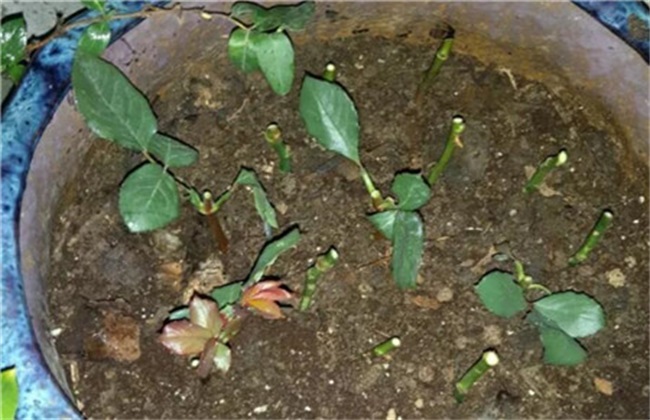
Before cutting, first poke a few small holes in the cutting substrate, then insert the cuttings, then firm the substrate and water. Then cover with plastic film, and also poke a few small holes in the film to ensure its permeability. If growing in pots, then after cutting, place them in a bright place with a not-too-high temperature; in winter and spring, shading is not necessary. After about ten days, the film can be removed, and rooting occurs in about a month. When the new shoots on the above-ground part grow their fourth leaf, they can be transplanted and planted out for normal care.
The above is a brief introduction to the cutting method for lisianthus. That's all for today's introduction. This article is for reference only, and I hope it can help everyone!