What are the harms of insufficient milk in sows?
When raising pigs, sows are something we need to focus on. If they are managed poorly, sows are prone to many problems. Insufficient milk in sows is one of the very common phenomena, and for many beginners, insufficient milk in sows seems like nothing serious. But in fact, insufficient milk in sows has great harms. So what exactly are they? Below, the editor will give everyone a brief introduction. Let's take a look together!
1. Increased piglet mortality
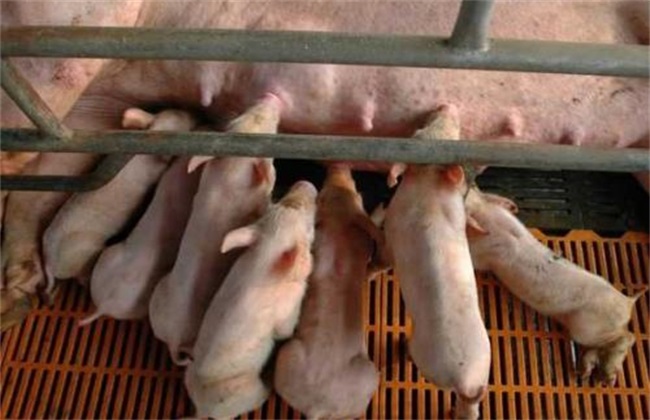
If a sow does not have enough milk, the first harm it causes is increased piglet mortality. First, if the sow's milk is insufficient, piglets are very likely to be crushed to death. This is especially true during the first week after farrowing, because during this period the sow's body is relatively weak. Because the milk is insufficient, the piglets frequently nuzzle and push at the sow's udder, causing the sow to become restless and constantly lie down and get up, resulting in piglets being crushed to death.
And most importantly, if the sow does not have enough milk, many piglets will starve to death because they cannot eat their fill. Because piglets cannot eat enough, their blood sugar drops, and their body temperature also falls as a result, ultimately leading to death from physical weakness. Moreover, if piglets do not get enough breast milk after birth, their disease incidence will increase. This is because sow's milk contains many antibodies that can effectively enhance piglets' disease resistance. If the milk is insufficient, piglets will be highly susceptible to disease, and in severe cases this can lead to death.
2. Increased number of substandard pigs
After a sow gives birth, if her milk is insufficient, the number of quality pigs after weaning will drop sharply. This leads to a large increase in substandard pigs. This is because when the sow's milk is insufficient, piglets weigh relatively little at weaning. In particular, piglets that have not reached 11 jin by three weeks are called substandard pigs. After substandard pigs begin nursery rearing, both their mortality rate and culling rate will be much higher than those of normal-weight pigs. In addition, substandard pigs grow very slowly, and the breeding risk is also very high, to the point that the returns may even be less than the input costs.
3. Increased fattening costs
A piglet's weight at weaning is directly related to its final weight at market. And the weaning weight of piglets is mainly provided by the sow's milk. If the sow's milk is insufficient, it will directly lead to a decrease in piglet weight at weaning. This leads to excessive feed consumption, higher breeding costs, and consequently lower breeding benefits. This is also the main reason many pig farms say they cannot make money. For example, at weaning, for every 1 kg increase in body weight, feed consumption can be reduced by about 6 kg, and the fattening cost per pig can be lowered by about 15 yuan. Therefore, the greater the weaning weight, the lower the feeding cost.
The above is a brief introduction to the harms of insufficient milk in sows. That is all for today's introduction. This article is for reference only, and we hope it can help everyone!