What are the common methods of cage fish farming?
Cage fish farming is now a commonly used fish farming method in our country, and it covers a relatively large farming area in our country. Specifically, netting is made into cages, which are then placed in selected waters for fish farming. It allows high-density rearing, and the fish that can be farmed are also very many, and it is now relatively common. So what exactly are the methods of cage fish farming? Below, the editor will give everyone a brief introduction to the common methods of cage fish farming. Let's take a look!
1. Fixed cages
Fixed cages are one method in cage fish farming. Wooden stakes or concrete stakes are used to fix them to the water bottom. Then the top must be higher than the water surface, and the cage is then fixed to the top of the stakes, with the cage body about one meter above the water surface. Because fixed cages are relatively strong, they are mainly used in waters with large wind and waves. However, if the water level changes, fixed cages cannot float along with it. Moreover, the water volume inside the cage body will also change due to changes in water level. Therefore, fixed cages should not be used in some waters where the water level rises and falls too much. In addition, because the cage is fixed, maintenance and inspection are also not very convenient, and the water pollution of the cage is also relatively large, so in general they are used less.
2. Floating cages
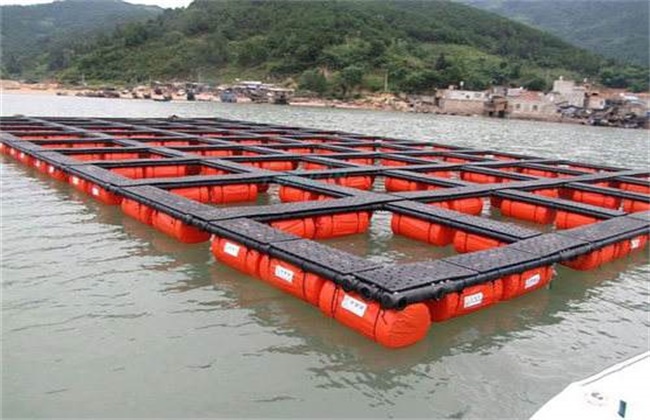
Floating cages are the most commonly used rearing method in cage fish farming. Floating cages are directly hung on buoyancy devices and frames, and the cage can float as the water level rises and falls. Therefore, the effective volume inside the cage will not be affected by this. Floating cages are suitable for some waters with deep water bodies and small wind and waves. Moreover, the cage is relatively high above the ground, which can effectively reduce pollution to the water body caused by fish feces or feed, so it can also maintain good water quality. However, floating cages have poor wind and wave resistance, so attention should be paid to adding a cover net.
3. Sunken cages
There is also another method, namely sunken cages. A sunken cage is in a fully closed state; as the name suggests, the entire cage is sunk into the water. Under normal circumstances, a sunken cage will not have changes in effective volume due to water level changes. Generally, sunken cages are suitable for use in some waters with large wind and waves or when the fish species are filter-feeding fish. Moreover, after the water surface freezes in winter, sunken cages can be used for overwintering. Sunken cages can effectively control height; as long as the cage does not reach the bottom, the effective volume will not be affected.
The above is a brief introduction to the common methods of cage fish farming. That is all for today's introduction. This article is for reference only, and I hope it can help everyone!