How many years does a clivia take to bloom? Three reasons why it does not bloom
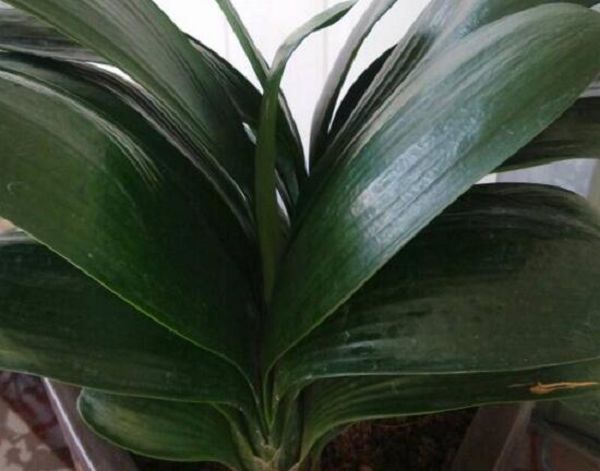
Clivia has the bearing of a gentleman and the elegance of an orchid. It is a tropical plant and is mostly grown in greenhouses or indoors in China, because it has high temperature requirements: it cannot go below 18 degrees or above 28 degrees. It has high ornamental, economic, medicinal and environmental value. It can absorb carbon dioxide and dust and release oxygen. Therefore, people mostly grow it in living rooms and studies. Many people have grown it for a long time but have never seen a clivia bloom, so exactly how many years does a clivia take to bloom?
1. A clivia blooms only when it has more than 12 leaves on one side
Clivia generally blooms every year, some bloom twice a year, though this is not common, and some bloom three times a year, which is even rarer. A clivia blooms when it has more than 12 leaves. So if you want to ask how many years a clivia takes to bloom, the best answer is: it blooms only after it has grown to at least 12 leaves on one side. It differs from other flowers and plants in that it does not start blooming just because it has been grown well for a few years; its blooming time is not calculated by the length of time. No matter how long you grow it, if the leaves on one side have not reached 12, it will not bloom.
2. Reasons why a clivia does not bloom
The reason a clivia does not bloom is very simple: there are not enough leaves. Generally, once the number of leaves on one side reaches more than 12 and the other conditions are also met, the clivia will begin to bloom. Once a clivia starts blooming, it blooms at least once a year, with the flowering period in February to April. Clivia flowers are opulent and brightly coloured, and it is one of the precious flowers. Below let us look at the reasons why a clivia does not bloom.
1. Insufficient light
Clivia prefers shade, but this does not mean it needs no light. In fact, light is very important to clivia. So how much light is appropriate, and how much will make a clivia bloom? First, spring and autumn, because the temperature is more suitable for clivia's growth, so as for light, just let it be translucent; in summer the sunlight is too strong, so pay attention to shading to prevent the clivia's leaves from being scorched by the sun, so simply place the clivia in a cool, ventilated place; in winter the temperature is lower, so let the clivia receive light for a long period.
2. Too much nitrogen fertiliser
Although a clivia blooms when it has more than 12 leaves, this does not mean the more leaves the better. Some flower enthusiasts, in order to grow all 12 leaves, keep adding fertiliser to the clivia, not realising that if too much nitrogen fertiliser is added, it will only make the leaves grow excessively, resulting in leaves growing but no flowers. Therefore, in ordinary care, when the leaves reach about 10, pay attention to controlling the application of nitrogen fertiliser and increase the application of phosphorus and potassium fertilisers to promote the clivia to bloom earlier.
3. Uneven regulation of light and temperature
When the number of leaves on one side of the clivia reaches 10, artificial regulation of light and temperature must be carried out. Control the daytime temperature within the range of 18 to 28 degrees, and the nighttime temperature at 8 to 10 degrees, with light for 10 hours a day, and regulate according to this standard for about one month. The clivia will then bolt and form buds, and it can bloom in about fifty days.
3. The flower language and symbolic meaning of clivia
The ancients said: a gentleman is modest, gentle and courteous, talented but not arrogant, successful but not proud, and living in a valley without feeling inferior. Clivia has the demeanour of a gentleman and the nobility of an orchid, so its flower language is: noble, with the manner of a gentleman. It symbolises strength and firmness, unyielding majesty, wealth and good fortune, prosperity and happiness.