What practical measures are there for keeping feathers on laying hens in winter?
Winter is about to arrive. The winter climate is severely cold, and the insulation measures in poultry farm henhouses are not necessarily very good, so ways must be found to reduce heat loss from the chickens' bodies, and at this point the idea is to find ways to increase the feathers on the chickens. So how can feather preservation for laying hens be done well in winter? Let's take a look.
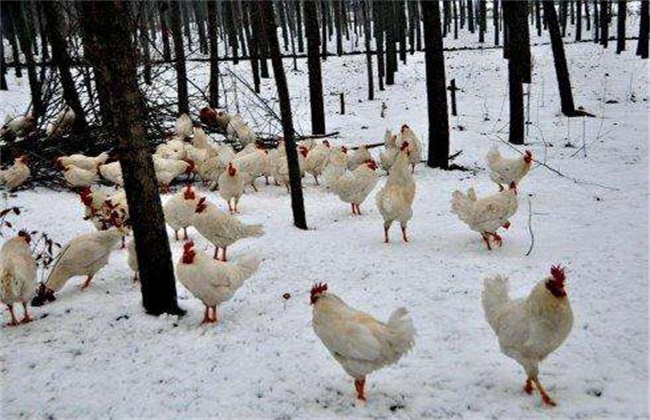
1. The necessity of feather preservation for laying hens in winter
In winter, the egg-laying capacity of laying hens declines, and the demand for nutrients decreases accordingly, so only a small amount of nutrients needs to be provided. Therefore, the feed formula should be adjusted, shifting the focus to promoting feathers, so that the flock can overwinter safely. In order to promote feather growth and the chickens' health, the feed nutrition must be comprehensive. In the daily ration, attention must be paid to maintaining minerals, vitamins, trace elements and amino acids, to provide the necessary nutrition for the chickens' feather metabolism, and this is especially necessary as a supplement for net-raised and cage-raised chickens.
2. Methods to promote feather growth
First, attention must be paid to the addition and use of minerals, vitamins, trace elements and amino acids in the diet. Next, the content of coarse feed in the diet should be increased, while reducing the content of high-protein feeds such as corn, soybean cake and fish meal, and increasing the content of coarse feeds such as wheat bran and paddy rice. In winter the temperature is lower and the humidity in the henhouse is higher, which is extremely unfavorable for chicken feather growth, so dirt and moisture should be removed in a timely manner, the cages and houses should be kept clean and hygienic, and ventilation should be carried out appropriately and at the right time.
3. Points to note for feather preservation when raising laying hens in winter
In winter, chickens need fewer nutrients, so the amount of concentrated feed given should be reduced, and conversely the amount of coarse feed should be increased, with appropriate feeding of green, succulent feeds such as cabbage, celery and carrots. The ratio of concentrated feed, coarse feed and green feed is generally 15%:75%:10%. To meet nutritional needs, each chicken also needs 2 grams of sulfur, 3 grams of gypsum and 1 gram of Baoyuling added daily. For ventilation, pay attention to the timing, and it is recommended to do it at noon or in the afternoon when the temperature is higher.
The above is an introduction to feather-preservation measures for laying hens in winter. We hope it can help you. To learn more related knowledge, please stay tuned to us.