The clivia is growing very well, so why doesn't it bloom every year?
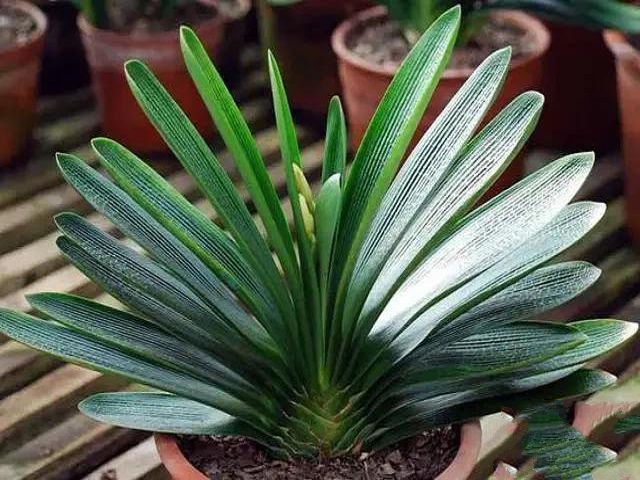
Clivia is a well-known greenhouse potted flowering plant. Its leaves are broad, thick and dark green, and its form is steady and dignified like a modest gentleman, making it very popular among flower growers. Clivia can be enjoyed both for its flowers and its leaves, but most of the time it is mainly grown for its foliage. In fact, clivia's flowers are also very beautiful. It blooms every year in winter and spring, and the flowering period can last from more than a month to two months. So if we want clivia to bloom every year, what should we do?
First, only clivia of a certain age will bloom. With reasonable care under normally suitable conditions, a clivia that has grown for more than three years can meet the requirements for blooming. Generally, a clivia over three years old can have more than 12 leaves and has already grown into a fairly large plant. It has already gained the ability for reproductive growth, and when winter and spring arrive, it will naturally bloom.
Second, be sure to provide a suitable temperature when the buds are developing. Clivia is native to tropical and subtropical rainforests, where even in winter the temperature does not fall below 10 degrees. But now clivia is grown in pots all over the country, and if the indoor temperature is below 10 degrees, it will also be very difficult for it to bloom. It is best if there is indoor heating, as you can control its blooming before the Spring Festival so that it is exactly in full bloom during the Spring Festival. If there is no indoor heating, then wait until after the beginning of spring, when the temperature slowly rises, and let it bloom then.
Third, be sure to give sufficient light when the buds are developing. The blooming of any plant requires sunlight. In its native tropical and subtropical regions, clivia grows under trees. Although it likes shade, the scattered light is still quite abundant. In winter and spring, temperatures in most parts of China are very low. The sunlight at this time is very soft, so it can be given direct sunlight.
Fourth, properly control water and fertilize during the bud development period. Clivia briefly goes dormant during the high temperatures of summer. As soon as the cool autumn arrives, it immediately enters a rapid growth period. At this time, we can give it plenty of water and fertilizer, watering thoroughly and applying fertilizer mainly based on nitrogen fertilizer, letting it grow rapidly for a period first. By late autumn and early winter, we should slightly extend the watering interval and control the amount of water compared with the previous watering, and at the same time change the nitrogen and potassium fertilizer to fertilizer mainly based on phosphorus and potassium fertilizer, to promote the flower bud differentiation of clivia.
In summary, to make a pot of clivia that has already reached blooming age bloom, we should give it a suitable temperature, sufficient light, and reasonable watering and fertilizing during its bud development period. Then within less than a month, clivia will grow a flower scape from the middle and bloom.
Clivia is a perennial plant. To make it bloom every year, after its flowers fade in spring, promptly cut off the spent flowers and the flower scape, and promptly change the potting soil and apply enough base fertilizer, so that it continues to grow in the following year and stores nutrients, in preparation for blooming smoothly again in the winter and spring of the next year.
As it keeps growing year after year in this way, clivia will also continuously produce small side shoots from its base. After three to five years, the small side shoots will also grow into large blooming plants, and then a clustered clivia can be formed. The effect of a clustered clivia blooming at the same time is also quite stunning.