A detailed explanation of key precautions for bullfrog farming: master these key points
Bullfrog farming is becoming more and more popular now. After all, more and more merchants sell bullfrogs as a commodity, but there are also many things to pay attention to when raising bullfrogs. Farming follows the habits of bullfrogs. Below, let us learn about the precautions for bullfrog farming together.
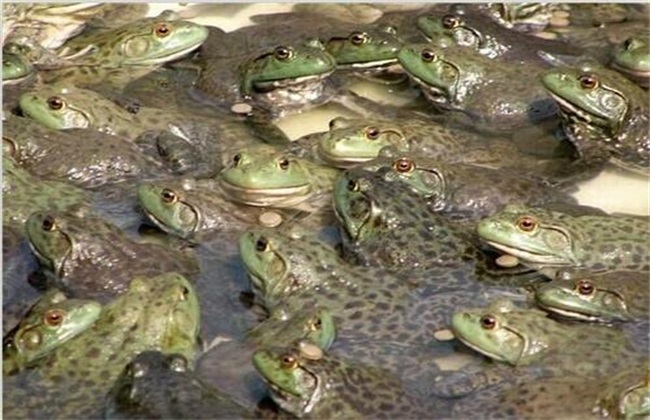
1. Feed
Bullfrogs are somewhat carnivorous and generally feed on small insects and the like. However, young frogs are a bit special: they only eat food that moves, and they generally ignore food that does not move. So when feeding young frogs, it is best to feed them live insects. Larger bullfrogs can gradually be trained to eat non-living food. Feeding bullfrogs emphasizes small amounts and multiple meals. Bullfrogs that eat too much fatten slowly, which harms farming profits.
2. Feeding
During the day, bullfrogs like to rest mostly in shady places and generally do not move around. Only at night do bullfrogs begin to hunt, so the number of feedings is mainly concentrated at night. Frogs in the wild have a more varied diet, and various trace elements are supplemented relatively adequately, but in artificial farming, farmers themselves must pay attention to nutritional balance. Long-term feeding of a single type of food is very bad for bullfrogs, so the food should be changed frequently, and some other nutrients should be added to the food.
3. Temperature control
Bullfrogs are relatively sensitive to temperature, so the temperature of the farm needs to be well controlled. Generally speaking, temperatures of 5-10 degrees Celsius and below will cause bullfrogs to gradually enter dormancy, while below zero may very likely lead to the death of bullfrogs. Bullfrogs themselves have no means of resisting temperature, and both high and low temperatures can cause problems for them. The most suitable temperature for bullfrogs is generally controlled at around 20-35 degrees Celsius.
4. Water source
Many people easily overlook the influence of water when farming bullfrogs. Because it is a farming pond, the water is stagnant and does not flow, which also means that some of the bullfrogs' excrement and harmful substances cannot be discharged in time. Long-term soaking in such heavily polluted water will increase the incidence of disease in bullfrogs, and diseases such as red leg disease appear even more frequently. So if the water is stagnant, it is best to replace the water source regularly. Choose the timing according to your own farming density. If it is flowing water, the interval can be appropriately extended, but regular cleaning is still needed.
The above are some of the issues that need attention in bullfrog farming, all of which are easily overlooked by everyone. Only by arranging the farm strictly according to the habits of bullfrogs can high-quality bullfrogs be raised. Bullfrog farming requires relatively high patience, but the final return is also not low.