How to select breeding stock for meat rabbits? Mastering these key points is crucial
High-quality breeding rabbits have obvious advantages in all respects. Since rabbits reproduce relatively quickly, farmers have more choices when selecting breeding rabbits. So what factors should we consider when selecting breeding rabbits? Let's take a look at the key points for selecting breeding stock for meat rabbits, so you can choose higher-quality breeding rabbits.
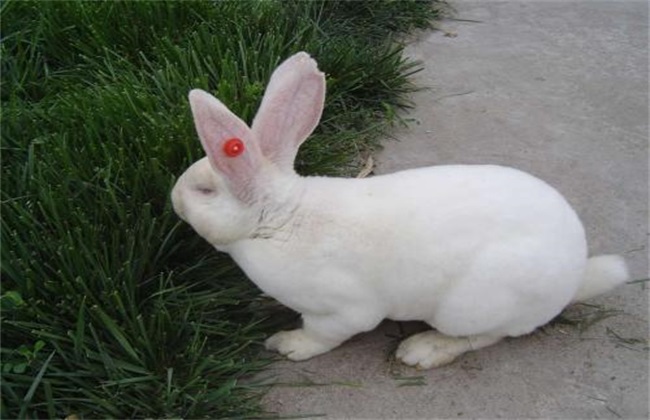
1. Selection of female rabbits
Female rabbits are the key factor in breeding high-quality stock, so high-quality female rabbits must be selected first. Choose healthy female rabbits with no abnormalities and a large number of offspring per litter, so that the number of offspring is guaranteed. Second, female rabbits with many nipples are preferred, as these generally have good reproductive capacity. If a female rabbit's litter size later declines and the offspring gradually show abnormalities such as deformities or abnormal teeth, she should be culled promptly, because the offspring of such a female rabbit carry certain abnormal genes that can easily affect the reproduction of the whole rabbitry.
2. Selection of breeding rabbits
At the beginning, farmers can only buy breeding rabbits; later they can breed and raise their own, and at that point farmers must select high-quality breeding rabbits themselves. Try not to choose young rabbits from a female rabbit's first litter, because during the first litter the female rabbit itself is not fully developed and the probability of inferior rabbits is relatively high; it is generally recommended to select from the second litter onward. Then choose breeding rabbits that are large in size, grow well, and show no abnormalities in any respect. In addition, some breeding rabbits should be selected as backups, leaving yourself an extra fallback option.
3. Optimization of breeding rabbits
Once the breeding rabbits are selected, you should not just raise them normally; it is best to optimize while raising them, that is, cull some of the inferior ones, so as to maintain the quality of the breeding rabbits at all times. Later, those that come into heat slowly or produce few offspring should be gradually culled. Generally speaking, after about three litters a rabbit's basic production performance is more or less fully revealed, and any that do not meet the standard must be culled directly. In addition, if any breeding rabbits become ill during this period, especially with hereditary diseases, it is best to manage them as backup breeding rabbits and decide based on the situation whether to continue using them.
4. Points to note
Breeding rabbits should not be raised mixed together with ordinary rabbits; they must be raised separately. Keep in mind that breeding rabbits are not for fattening, so do not blindly fatten them; the main goal is to maintain their vigorous physical vitality. Breeding rabbits must be allowed to move around a lot in daily life to reduce their fatness. If a breeding rabbit in estrus repeatedly fails to come into heat or refuses to mate, it is best to cull it promptly, as it is not good for breeding. The food fed to breeding rabbits should also differ from that of meat rabbits, mainly to enhance their physique.
The above are some key points for selecting breeding stock for meat rabbits. Rabbits are extremely efficient at reproducing, so with so many rabbits, do not worry about the difficulty of screening. Only breeding rabbits selected through multiple levels can ensure that the quality of the meat rabbits on the farm does not degenerate. For the sake of later profits, you must pay close attention to this.