A Detailed Explanation of the Advantages and Precautions of Cage-Rearing Meat Ducks
Cage-rearing meat ducks is a relatively efficient method of duck farming, and it has many advantages, but it also has its drawbacks. If something is slightly improper, these drawbacks will become important factors restricting duck farming profits. So what should be noted when cage-rearing meat ducks? Follow the editor to take a look.
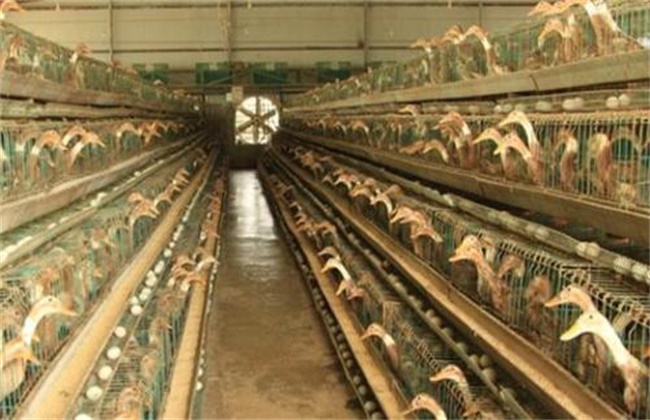
I. Advantages of Cage-Rearing Meat Ducks
Cage-rearing meat ducks can fully utilize the duck house space, increase stocking density, and raise output per unit area, and mechanized equipment can be used to reduce labor intensity. When the diet is nutritionally sufficient, cage-reared meat ducks can have their time to market shortened to about 60 days, can save about 10% of feed costs, and are entirely under manual control, subject to little external stress, and can effectively prevent some infectious diseases and parasites.
II. Precautions
Because cage-reared meat ducks have a small range of activity and their movement is inhibited, they cannot feed freely, so during the rearing process attention must be paid to preventing three diseases.
1. Paralysis
Cage-reared meat ducks are highly prone to a deficiency of calcium and phosphorus substances, which can cause unsteady standing and even paralysis and death. So when feeding, a small amount of calcium powder or gypsum powder can be added to the feed, and at the same time some river snails or small sand grains can be added, which can effectively supplement calcium and phosphorus substances and prevent this disease. If meat ducks have already contracted this disease, 0.1% vitamin D should be added to the feed in time and fed continuously for 10 days.
2. Vitamin Deficiency
If the feed types are too single, vitamin deficiency disease will occur, so some green feed and earthworms, river snails, frogs, etc. should be fed appropriately, and some multivitamins should also be added to the feed.
3. Green feed and earthworms, river snails, frogs, etc.
Cage-reared meat ducks have poor ventilation, and are highly susceptible to duck plague. When ducklings are 1-5 days old, a low-concentration potassium permanganate solution can be used as drinking water, and compound sulfadimidine and oxytetracycline can be added to the feed. The cages must be cleaned every day, and the duck house must be disinfected once a week. Once a duck is found to be sick, it must be isolated and raised in time.
The above is an introduction to the advantages and precautions of cage-rearing meat ducks. We hope it can help you. If you want to learn more related knowledge, please follow us.