What happens if you over-fertilize a Clivia?
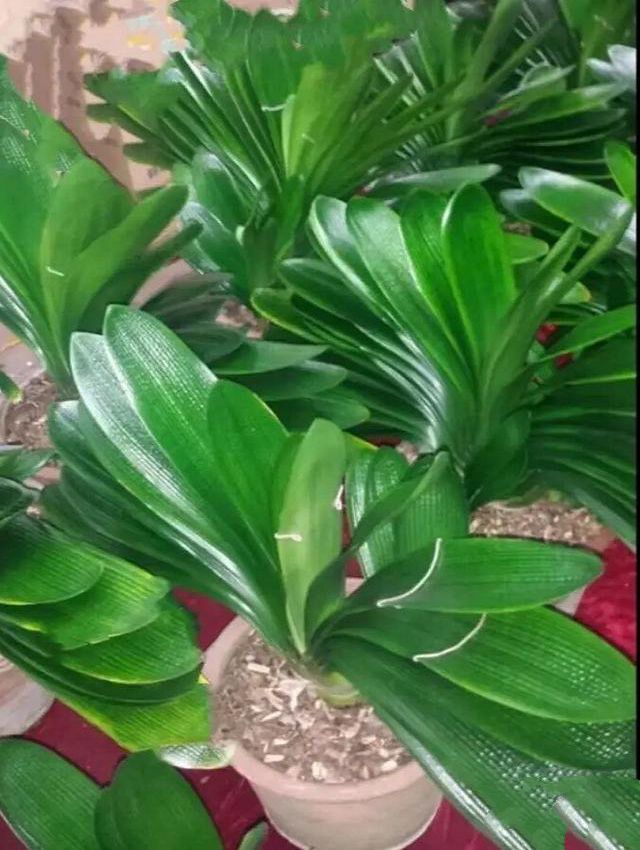
After fertilizing a Clivia, if the leaves are uneven in length, inconsistent in width, and unequal in thickness, with leaves becoming wide and thick and mostly wrinkled, that means over-fertilizing; without fertilizer it is hard to produce a top-quality Clivia; with too little fertilizer the Clivia survives, at most growing poorly; with too much fertilizer the leaves become thick, yellow, and scorched at the tips, and even if the Clivia does not die it is ruined!
During the growth process, the Clivia needs a large amount of nutrient supplementation. But fertilizing must follow the seasons, and there are major taboos in feeding: no concentrated fertilizer, no fertilizer in hot conditions; do not apply just after repotting; do not apply when growth is leggy; do not apply in midsummer, do not apply during dormancy; do not apply at budding, apply less at flowering, apply little or none during the rainy season, apply less to strong Clivias, apply dilute fertilizer frequently during the bud pregnancy stage, and apply dilute fertilizer frequently as adjustment after flowering; the fleshy roots must not come into direct contact with base fertilizer, and there must be a layer of foot soil as separation; refuse to apply un-decomposed organic fertilizer to prevent root burn and fungal infection!
Do not apply during the two dormancy periods: above 3~11 degrees; do not apply above 25~35 degrees. In an air-conditioned room below 25 degrees, a dilute cake fertilizer solution once a month is fine. During the summer dormancy season from July to September, fertilizing must be stopped.
Clivias like fertilizer, and it is nothing more than nitrogen, phosphorus, and potassium elements. Fertilizing must be done during normal growth periods and when the plant is in a healthy state. For diseased plants that have been fertilized, change the soil immediately. If after fertilizing the plant grows well with dark green, glossy leaves, that is normal; if you find the leaves suddenly enlarging and thickening along with runaway growth, that is over-fertilizing, and you should stop immediately or water heavily to flush and dilute the fertilizer strength. If leaves appear thick and fleshy and fail to spread, with scorched tips, yellow edges, and rotting leaves that keep spreading, take the plant out of the pot to check the roots, trim the rot, disinfect, repot in sterile soil, and keep it in a cool, shaded place for clean cultivation.
Nitrogen fertilizer: used for Clivia seedlings under three years old, to promote thick, wide leaves and raised veins; for mature Clivias from December to January during the bud pregnancy stage, do not apply nitrogen fertilizer to prevent leggy leaf growth.
Phosphorus fertilizer: promotes flower bud differentiation and formation during the bud pregnancy stage, and needs to be supplemented with potassium fertilizer for better root strengthening.
Potassium fertilizer: potassium fertilizer nourishes the roots, and nourishing the roots is also the primary task in growing Clivias. Good roots produce good appearance. Apply after the flowers are pollinated to ensure embryo formation, and the amount used must not be too large. Too much potassium inhibits physiological growth.