Key Technical Points and Practical Methods for Dry-Land Duck Farming Explained
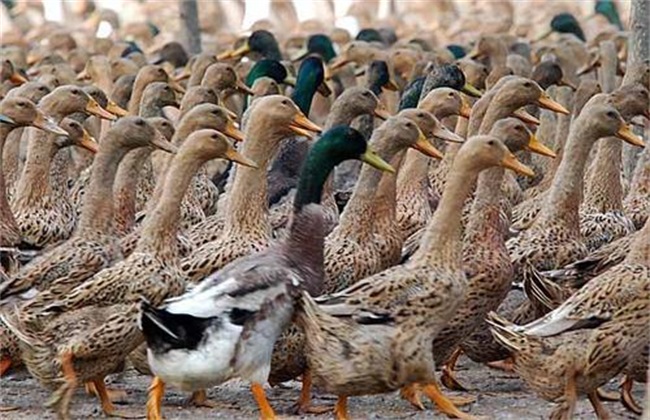
There are more and more ways to raise ducks these days, but many of them require an enormous amount of space, which creates major difficulties for large-scale farming, and the limitation of water sources in particular makes farming even harder. Below, let us take a look at dry-land duck farming techniques, which allow you to raise ducks on a large scale with a small site, solving the problem of wanting to expand your scale.
1. Building the Site
Dry-land duck farming does not require choosing a place with a river or the like; it is enough to have a water source nearby. The core idea is to use a pond instead of places like rivers to satisfy the ducks' need for water. Build a pond in the middle according to your own farming scale, with a depth of about 0.5-1 m, and prepare a drainage ditch and a water inlet on both sides to handle the water supply. Prepare a duck house nearby so that the ducks can be moved out of the way during routine management. Prepare several larger drinkers and distribute them evenly inside.
2. Selecting the Breed
Using this model places certain demands on the duck breed. First, the ducks should be somewhat docile and quiet, so that there will be less fighting when they take turns entering the pond, and the ducks will not easily be lost. Second, their disease resistance should be somewhat high, since after all, with such density, disease prevention in ducks is very important. Finally, the fattening effect should be good; this model is all about getting ducks to market quickly, because under this model the ducks have little activity, and only a breed that fattens well will reduce feed waste.
3. Feeding Techniques
The feed requirements under this model are not very different from usual, except that more green feed is needed relatively, and some small fish and shrimp and the like should also be fed regularly to appropriately meet the ducks' various nutrient needs and reduce the chance of disease. The number of feedings per day is 3-4 times. Ducks under this model have little activity, and feed is not digested very quickly, so to give them enough time to digest, eating small meals more often is the most suitable feeding method.
4. Sanitation and Cleaning
The last point is sanitation and cleaning. Because the duck density is too high, special attention must be paid to hygiene, especially regarding duck manure and the pond. As for duck manure, clean it once every 3-5 days depending on the situation, to avoid it piling up. The water in the pond is actually very good fertiliser water, because the ducks will also excrete a lot of manure into it, so the pond water can be drained out and left to settle, and the duck manure deposited at the bottom can be used to water vegetables. Disinfection is needed once a month to do a good job of disease prevention.
The above is dry-land duck farming techniques. Dry-land duck farming can greatly reduce the ducks' demand for water sources, and at the same time it also makes management easier for everyone, since ducks that are grazed daily are really hard to manage by hand. If you have a small site, you might as well try this model.