What are the methods for renewing and rejuvenating a clivia?
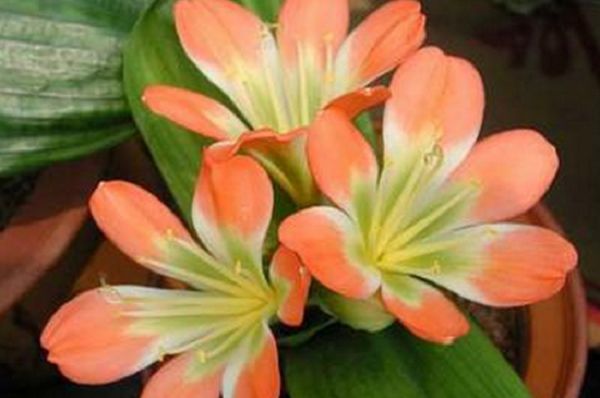
After being cultivated for a relatively long time, a clivia (Clivia miniata) gradually slows its growth, its pseudostem elongates and becomes thinner, only a few leaves remain at the top, and it produces almost no new roots, surviving only on a few old roots in an "aged" state. At this point, renewal and rejuvenation methods should be adopted to restore its vigor.
In May of spring or September of autumn, take the clivia plant out of the pot, remove the soil from the roots, pick off the remaining aged leaf bases, wash and air-dry the pseudostem area, and use a sharp knife to make a horizontal cut about 0.8-1 cm below the healthy leaf base to cut off the lower part of the plant. The cut surface must be flat and smooth, avoiding crushing damage that would affect root formation. Immediately apply charcoal powder or sulfur powder to the cut to prevent bleeding and infection, then place it in a cool, ventilated spot. Wait until the cut surface is slightly dry, then plant it in a new flowerpot with moist plain sandy soil, water thoroughly once after 2 days, and afterward water sparingly to keep it moist, tending it carefully and avoiding fertilizer; at a temperature of 20-25°C, new roots can be seen emerging around the pseudostem cut in about 10 days; in 30 days the roots can grow to about 5 cm; in 40-50 days the roots exceed 20 cm. At this point, you can repot it with growing medium and care for it normally. Just like the offsets from division, it grows relatively fast and its growth vigor is restored.
The cut-off section of pseudostem and the old roots, as long as they are not rotted, can be buried in plain sandy soil and placed in a cool, ventilated spot with proper care; new shoots may sprout around the cut, but it takes 2 years for them to grow out.