How do you deal with fertilizer burn and pesticide burn in orchids?
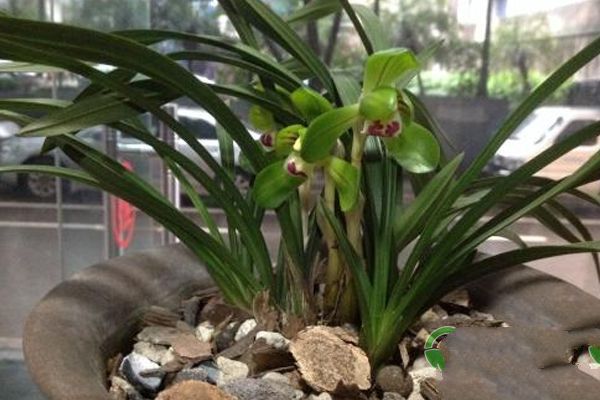
Applying too much or too concentrated fertilizer to orchids will hinder the growth of the orchid seedlings. In mild cases the leaf tips turn scorched black; in severe cases the seedlings wither and the roots rot; it is possible for one new shoot to appear while an old seedling dies off, so that a pot of orchids grows fewer and fewer. This is fertilizer burn. Normally you must be sure to apply light fertilizer frequently to avoid fertilizer burn in orchids. If fertilizer burn has already occurred, you must repot immediately. Carefully tip out the orchid seedlings, cut off the rotted roots, and rinse clean with clear water. Although the roots of a fertilizer-damaged orchid have rotted, new bud eyes often sprout on the pseudobulbs, so handle carefully when washing to avoid bruising the bud eyes. After washing, soak for 3?5 minutes in a diluted solution of a fungicide such as thiophanate-methyl or carbendazim, place in a cool spot and air-dry until the wounds are slightly dry, then replant with clean plain moss or Kanuma soil (Kanuma stone) and keep in a shaded place for management. If it is during the growing season, after 1 month it can gradually receive 90% scattered sunlight, and after half a year gradually apply a small amount of light fertilizer. After 1 year, once new strong seedlings have grown, return to normal management.
Pesticide burn in orchids is caused by using too concentrated a pesticide when preventing and controlling pests and diseases, which directly damages the orchid plant. In mild cases irregular spots from the size of a grain of rice to a soybean form, gradually going from light to dark and from yellow to brown, finally becoming dark brown pesticide spots. These spots are very similar to virus disease spots, and are most likely to occur where the pesticide liquid readily collects, greatly affecting the beauty of the orchid leaves. Severe pesticide burn can also cause the whole seedling to turn yellow and wilt, as if it had been sprayed with herbicide, and it may not recover for several years.
There are now many kinds of pesticides, and the mixing ratios are not uniform either. Some are by percentage, some by permille, some use 1/1000, and some use 1/2000?1/3000. Some pesticides only state how many kilograms of water one packet is mixed with, and no pesticide directly states how much water 1 milliliter is mixed with. When using them, you need to convert the amounts yourself; if you miscalculate by one percentage point, that equals a concentration 10 times too strong, and the problem can be serious. Therefore before use you must read the instructions clearly and calculate carefully and accurately to avoid unnecessary losses. If you find that a pesticide has been sprayed too concentrated, and you discover the problem within half a day, you should immediately spray-rinse with clear water twice, then spray once with brassin (Shuofeng 481) to protect the orchid leaf cells and reduce the impact of the pesticide burn; if too much time has passed, the damage from the pesticide burn will be hard to avoid.