How to raise meat sheep so they grow fast? Detailed introduction to feeding methods
Meat sheep are very popular in China, and the price of mutton on the market is currently very favorable. Sales in China are second only to pork and beef. Therefore, the scale of meat sheep farming in China is currently very large, and when raising meat sheep, farmers all want to increase the growth rate of their meat sheep and strengthen their market competitiveness. So how should meat sheep be raised so they can grow fast? Let's take a look together below!
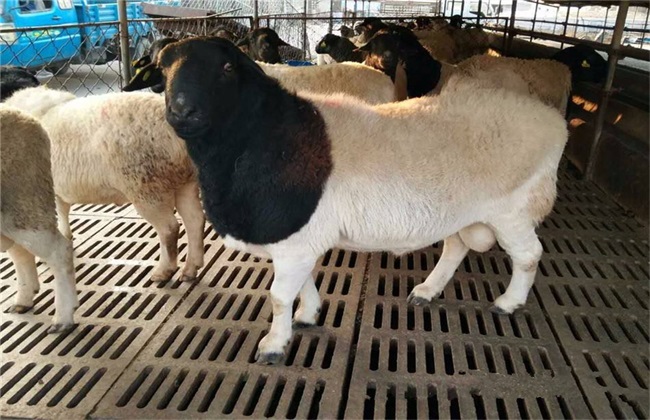
1. Breed selection
The breed directly determines the growth rate of meat sheep, so if you want meat sheep to grow fast, then breed selection is very important. For example, native Chinese sheep breeds such as the Small-tailed Han sheep and Hu sheep have advantages such as excellent meat quality, fast growth and strong reproductive capacity. Many foreign breeds have also been introduced into China. Although there are currently quite a few excellent sheep breeds in China, attention must also be paid to selecting reasonably according to the climate and environment of the farming area. For example, if the summer temperature exceeds 35 degrees, then it is not suitable to raise cashmere goat breeds, and if the winter temperature is very low, then it is not suitable to raise short-haired breeds such as Boer goats.
2. Farming model
The farming model is also crucial to the growth rate of meat sheep. If it is a free-range model, then attention should be paid to doing supplementary feeding well every morning and evening, and the concentrate feed should have relatively high nutrition such as protein and energy. If it is a confined feeding model, then feeding should follow the principle of more meals and smaller amounts, because the sheep's absorption capacity is relatively poor, so increasing the number of feedings is more conducive to the sheep's nutrient absorption. And when feeding feed, the feed should be reasonably matched, with roughage making up the majority, concentrate feed second, and finally protein feed and fresh forage; when feeding feed, it should be paired with an appropriate amount of drinking water, and in winter warm water should be the main choice.
3. Scientific feeding
When raising meat sheep, they should be raised separately according to factors such as different growth stages and types. The fattening effect of separate feeding is very obvious, and then we should control the feed well according to the characteristics of each group. For example, in the early stage of young sheep, forage should be the main feed, while in the adult stage, because the purpose is fattening, feed should be the main focus. Because there is a relatively large difference in the feeding amount for these two, if they are fed together, then it will have a great impact on the fattening of both types of sheep. Finally, if the purpose is fattening, then it is best to mainly use confined feeding.
4. Fattening techniques
When fattening meat sheep, meat sheep are very prone to disease. After disease occurs, meat sheep will show symptoms such as weight loss, reduced appetite or even not eating. This has a great impact on fattening, so we must do a good job in disease prevention and control for meat sheep. Moreover, if the sheep shed is too dirty, it will also have a certain inhibitory effect on the fattening speed of meat sheep. For some sheep that eat slowly, we can add some digestion-promoting agents to the feed. Finally, it should be noted that during rapid fattening, feed should be the main focus, and forage can only be used to supplement nutrition for the meat sheep.
The above is a brief introduction to how to raise meat sheep so they grow fast. That is all for today's introduction. This article is for reference only, and I hope it can help everyone!