What should you pay attention to with a newly dug fish pond? These matters need to be understood in advance
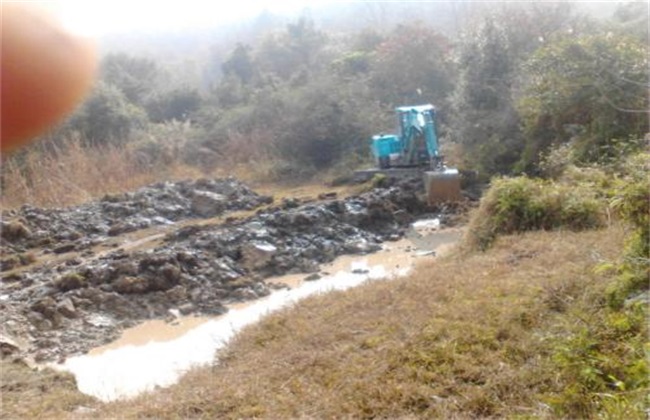
Fish farming has now become a popular industry, and many farmers have this idea. But there are few old fish ponds in rural areas now, so basically you have to dig a new fish pond yourself. So can a new fish pond be put into use directly? Let's take a look below at what you need to pay attention to with a newly dug fish pond.
1. Clean up residual fish eggs
The first requirement for digging a fish pond is that the water source must be abundant; without water, you basically cannot raise fish. Many fish farmers may not know that some fish eggs are quite tenacious. If you start raising fish directly in a newly dug fish pond, other fry may later hatch out. These fish have not undergone safe treatment and are very likely to carry infectious pathogens, affecting the later farming returns. Therefore, a newly dug fish pond needs to be dried first, then filled with water, cycling about twice, to clean up residual fish eggs.
2. Check whether it leaks
Checking the pond for leaks is very important. If you only discover a leak after you start raising fish, it will be much more troublesome to deal with then. New fish ponds are the most prone to leaking, because they are now dug by machine, and accidental cracks cannot be seen. To check whether it leaks, fill the pond with water and then observe the degree of water loss. If there is no obvious change in the water level within 1 to 3 days, it basically proves that there is no leak.
3. Disinfection
With a newly dug pond, everyone is unsure whether it is sanitary and clean, but to be safe, disinfection still needs to be done. When disinfecting, people generally use quicklime, bleaching powder and the like, mainly sprinkling them inside the pond. In fact, this method is still not comprehensive enough, because pathogens may also hide around the new pond, so it is best to properly disinfect the surrounding area as well. If the water is deep, add more disinfectant; if the water is shallow, add less. The main thing is to sprinkle it thoroughly.
4. Manage water quality
When the pond is later filled with water, you must pay attention to the water quality. Fish farming has very high requirements for water quality, and fish farmers in many places have suffered big losses because of water pollution. Therefore, with a newly dug pond, try to put some effort into water quality management, and do not let polluted water flow into the new pond, otherwise all the previous work will be wasted. It is best to have a section of purification space between the water source and the pond, so there is an extra layer of protection.
The above are some of the things that need to be done for a newly dug fish pond. As long as these tasks are done well in the early stage, there will be great assurance for later sanitation and safety. When digging a fish pond, things like drainage channels should be planned out first, so that operation is convenient.