What to Do When a Clivia Flower Stalk Gets Stuck (Jianjian)? Causes and Solutions
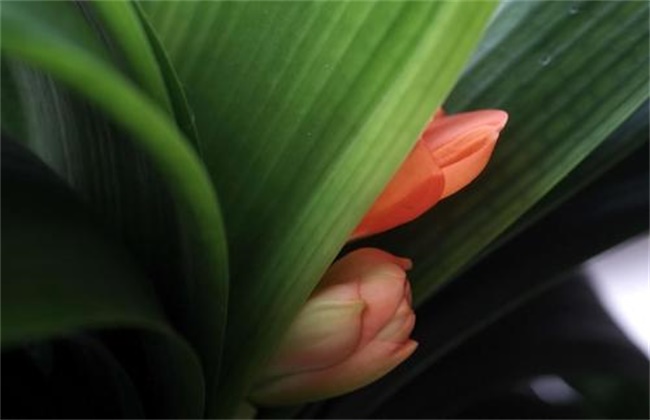
Clivia is a famous flowering plant, and its blooming period falls right around New Year's Day, making it a very important festive flower. However, some gardeners find that although their Clivia has bloomed, the flowers are stuck among the leaves. This phenomenon is called "jianjian" (stuck arrow). So what should you do in this situation? Let's find out together.
1. Unsuitable temperature
The flowering of Clivia and the emergence of the flower stalk require stimulation from specific temperature conditions, namely a temperature difference. Clivia needs a day-night temperature difference of 5-10 degrees to stimulate normal growth of its flowers and flower stalk. If the temperature requirements are not met, it will affect the development of the flower buds and flowering, resulting in the stuck flower stalk phenomenon.
Solution: Move the Clivia to a warm indoor area during the day and place it in a cool area at night. After 3-5 days of this adjustment, the flower stalk should be able to emerge normally. Alternatively, you can artificially create a temperature difference environment by covering the flower stalk area with a black plastic bag during the day to raise the temperature inside the bag, and removing it at night. This also works.
2. Potting soil too dry
Clivia is a plant that likes water relatively much, especially during the flowering and stalk-emergence period, when its water demand is even greater. So it cannot lack water. If the potting soil is short of water at this time, it will affect the normal growth and development of the Clivia, and the stuck flower stalk phenomenon will occur.
Solution: During the flowering period, water the Clivia promptly to replenish moisture. You can also spray water mist around the plant to increase air humidity, which can promote flower stalk growth and also relieve the stuck flower stalk symptoms.
3. Improper fertilization
During the flowering period of Clivia, if too much nitrogen fertilizer is applied, it will inhibit the growth of the flower buds and flower stalk, causing poor flower bud development and making it difficult for the flower stalk to emerge.
Solution: During the flowering period of Clivia, nitrogen fertilizer application should be controlled, or no nitrogen fertilizer should be applied. Instead, phosphorus and potassium fertilizers should be increased. If too much nitrogen fertilizer has been applied, you can water heavily, and after the fertilizer is absorbed, drain the water away. Then spray a potassium dihydrogen phosphate solution as a foliar fertilizer, which can also promote the growth of flower buds and the flower stalk.
4. Root damage
Clivia is a rather special flowering plant. Its flowering is closely related to the nutrients stored in its leaves, and the flower buds normally remain dormant hidden in the pseudobulb until the right time comes for them to grow and develop. If the roots are damaged during the flowering period of Clivia and cannot absorb water and nutrients to supply the growth of the flower buds, then the flower buds cannot bloom normally. Even if the flower buds grow out, if nutrients and water cannot keep up later, growth will inevitably be weak, making it impossible for the flower stalk to emerge normally, forming a stuck flower stalk.
Solution: If the stuck flower stalk is caused by root rot, then you can only cut off the poorly growing flower buds to save nutrient consumption, and at the same time cut off the rotten roots and replant.
The above is an introduction to the causes and solutions for stuck flower stalks in Clivia. We hope it helps you. If you want to learn more related knowledge, please stay tuned to us.