How to grow orchids? Please keep this complete guide to growing methods
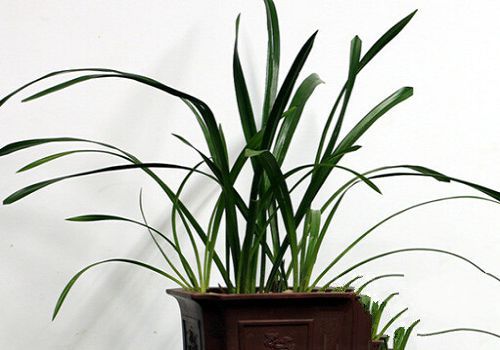
Orchids are loved by many of us, and how to grow them is a question we all care about. Let's take a look below:
Orchid growing methods:
1. Potting soil requirements:
A neutral to slightly acidic soil rich in humus, loose and well-draining is best, with a pH generally around 5.5 to 6.5. In Sichuan, Emei Xiantu and "Xinghong brand" refined orchid potting medium are often used, but more commonly "bamboo root soil" and leaf mold from broadleaf forests in mountainous areas are used to grow orchids.
2. Placement location:
In spring, summer and autumn, orchids can be grown outdoors and on balconies, and a spot with good ventilation, humid air and no environmental pollution should be chosen. Being near a pond or riverside is of course good, but at minimum there should be tall trees or a bamboo grove and a shade net to reduce sunlight exposure and lower the temperature. Orchid pots are best placed on a wooden rack (or steel rack); if placed on the ground, bricks should be used underneath. On a home balcony, a small galvanized iron water tank can be used to store water with bricks placed on top for growing, to increase humidity.
3. Proper shading:
Most orchids are semi-shade plants, and most types fear direct sunlight, so proper shading is needed. In early to mid-April, the net can be removed and windows opened to let in more sunlight to promote growth. In May, except for the midday sun, they can get 6 hours of light; starting in June, shade all day long; after October, except for midday, they can be fully exposed for care. Remember the saying: "More shade gives good leaves, more sun gives good flowers."
4. Reasonable fertilizing:
Orchids are naturally "plain" feeders, and fertilizing should depend on the chosen potting soil and growth conditions. Those growing vigorously and free of disease can be fertilized, while poorly growing ones should not be fertilized or only given a small amount. Newly potted orchids whose roots have not fully developed should only be fertilized after 1-2 years. Generally in June-July, when orchid leaf buds extend to about 1.5 cm, apply a decomposed liquid fertilizer once every three weeks (a dilute concentration of 10% is suitable). Do not use chemical fertilizers. In high-temperature seasons, fertilizing is not suitable. From August to September, apply diluted liquid fertilizer once every two to three weeks. Each fertilizing of orchids should preferably be done in the evening, with clear water applied in the morning, called "return water."
5. Proper watering:
Rainwater and spring water are best for watering orchids; tap water or rice-washing water needs to be left overnight before use. When watering, pour from the edge of the pot, and do not pour into the flower buds. The amount of water should be determined by temperature, the dryness or moisture of the potting soil and the growth conditions of the orchid. Plants with large leaves get more water, those with fine leaves get less. In April-May, when new shoots have not yet emerged from the soil, the potting soil should be somewhat dry, as too much moisture makes new shoots prone to rot; June-September is the growth period for new orchid shoots, so the amount of water should be increased, watering once each morning on sunny days or once daily, and absolutely avoid watering under the blazing midday sun. In autumn, reduce the amount of water as appropriate, and misting the leaves can be used to keep the potting soil moist. In winter, water should be controlled even more, keeping it at "80% dry, 20% moist" as suitable.
6. Evening misting:
Orchids originally grow in a humid environment, so in dry seasons, besides shading, misting must also be done in the evening to increase air humidity and lower the temperature; water can also be poured on the ground (table surface) where the orchid pots are placed. "One cold and one hot" can further stimulate orchid growth.
7. Wind and rain protection:
The yellowing and falling of old leaves from the "February ghost wind" is a normal phenomenon, and dead branches and fallen leaves can be cut away. Orchids can tolerate light rain, but must avoid moldy rain, torrential rain or continuous rain, otherwise the heart and leaves rot easily. In seasons with a lot of rain, a small amount of plant ash can be scattered appropriately.
8. Pruning and flower removal:
During orchid cultivation, withered, yellowed, broken and diseased leaves should be cut away regularly to improve ventilation. For precious orchids, if there are too many flower buds, keep only the strong buds, with 1-2 flower buds per pot being suitable. Spring orchids should be removed half a month after blooming, and precious orchids should be removed after 7 days, so that the leaf buds of spring orchids grow robustly and bloom better the following year. For summer orchids, when the last flower on the inflorescence has been open for a week, cut it off 3 cm above the pot surface.
9. Cold protection and warmth:
Because orchid varieties differ and their places of origin vary, their cold resistance also differs, so the time to move them indoors in winter and their indoor placement also differ. Cold orchids, autumn orchids and Baosui orchids grow in the south and should be moved indoors (or have windows closed and nets drawn) when the temperature is 5°C, and placed in a sunny spot facing south as much as possible. Spring and summer orchids have strong cold resistance and can be moved indoors only when the temperature reaches 0°C, placed on the northeast side. Around midday on sunny, windless days, windows facing south or southeast should be opened and nets pulled for ventilation. Autumn orchids should not have windows opened on sunny days at 1-2°C. Of course, if a greenhouse is available, electric lighting can be used for heating.
10. Disease and pest prevention:
Potting soil should generally be sterilized (exposure to the blazing sun also works) to prevent disease. Orchids are most prone to southern blight in rainy, high-temperature seasons; for a small amount, it can be brushed off with a damp cloth, and for many pots, a 500-800 times dilution of Bordeaux mixture or thiophanate-methyl can be used, sprayed once every 7-10 days. Among pests, scale insects (commonly known as "orchid lice") occur frequently; during the hatching period, use a 1000 times solution of 1% omethoate and 25% phosmet emulsifiable concentrate, sprayed once a week. To treat the symptoms one must treat the root cause: pots should be spaced appropriately, placed at varying heights, and ventilation increased, so as to reduce the occurrence of disease.
The ornamental value of orchids:
The orchid is a flower of unique style, and its ornamental value is very high. The flower colors of orchids are elegant and subtle, mostly tender green and yellow-green, but those with pure-colored centers are especially precious. The fragrance of orchids is clear without being heavy; with one pot in a room, fragrance fills the air. "With hands I tended two or three orchid buds, in warm sun and gentle wind they opened one by one. Sitting long, I forgot the fragrance was in the room; pushing the window open, a butterfly came flying." This poem by an ancient writer vividly expresses the subtle fragrance of orchids. The flower forms of orchids are sometimes dignified and graceful, sometimes elegant and luxurious, full of variation. The leaves of orchids stay fresh green all year, combining strength and softness, with beautiful postures; even when not in bloom, they are like a living work of art. "Weeping dew scatters the light astray, in the wind their shadows slant. How could ordinary folk compare? Looking at leaves beats looking at flowers." This poem describes the graceful and varied beauty of orchid leaves.
The flower language of orchids:
Orchids generally describe a gentleman, and often describe a woman as an orchid in a secluded valley.
Oncidium: hidden love.
Gladiolus: elegance, longevity, peace and health.
The flower language of orchids: indifferent to fame and gain, elegant, beautiful, noble and virtuous.