How to care for hibiscus in winter? Detailed pruning methods
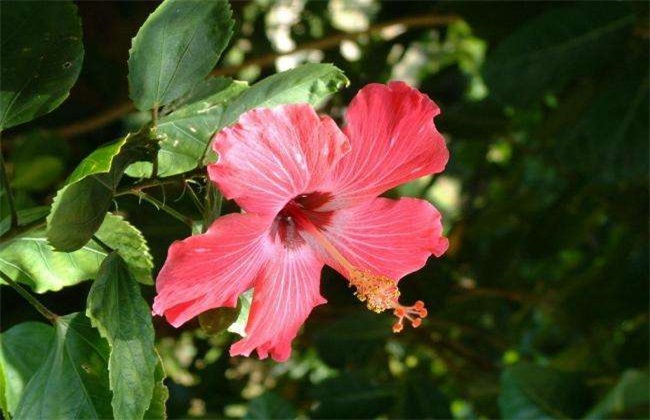
Hibiscus is also grown on a very large area in our country, and when growing hibiscus, it requires our focused care, especially the pruning work. And when caring for it, we should adjust our care methods according to the changes of the seasons. So now, as time goes on and we enter winter, how should we care for and prune hibiscus? Let's take a look together below at the winter care and pruning methods for hibiscus!
1. Appropriate fertilizing
Hibiscus likes to grow in soil with sufficient fertility. However, after entering winter, because the temperature drops, the plant's demand for fertilizer nutrients also becomes smaller. Therefore we should pay attention to controlling the amount of fertilizer, and around October we should start controlling fertilization. A thin layer of fine dry fertilizer can be spread appropriately on the soil surface. Special attention should be paid to controlling the application amount of nitrogen fertilizer, to prevent excessive nitrogen fertilizer from causing excessive vegetative growth of branches and leaves, thereby affecting the hibiscus's dormancy. If the leaves show yellowing, then ferrous sulfate aqueous solution can be watered on appropriately, in order to improve the soil's physical and chemical properties.
2. Reasonable watering
When hibiscus overwinters, attention should be paid to controlling moisture well; the soil must not be too wet, so watering must not be excessive, and keeping the soil in a slightly moist state is enough. Usually water about once a week, and the amount of water must not be too much. Prevent a low-temperature, high-humidity environment from causing root rot in hibiscus. However, if the air is too dry, it may cause yellowing, drying up and other phenomena in hibiscus leaves, so air humidity should be appropriately increased. Methods such as spraying water around the plant or covering with film can be used to control humidity, providing it with suitable growing humidity.
3. Maintaining temperature
In winter, hibiscus will gradually enter the dormant period, and during the dormant period, the temperature range should be around 5-15°C. If the temperature exceeds 15°C, then it will affect the hibiscus's dormancy and affect the flowering of the next year. And if the temperature is lower than 5°C, then the hibiscus plant is prone to cold damage. Therefore maintaining temperature is very important, and at the same time, when we water, we should also pay attention to the water temperature. The water temperature must not differ too much from the air temperature, otherwise it is easy to cause damage to the hibiscus roots. Therefore when watering, the water temperature should be kept close to room temperature.
4. Winter pruning
Winter pruning is also very important for the growth of hibiscus. It can adjust the tree shape of the hibiscus, letting it form a reasonable tree structure, and avoid excessive consumption of too many nutrients by vegetative growth. So during the period from when the hibiscus formally overwinters to when it resumes growth in spring, it should be heavily pruned at least once. Usually keeping the branches at about 10cm is enough, and the rest is cut back. Then after the branches sprout, keep two side branches, and then remove the excess small branches. If the hibiscus plant has been growing for a relatively long time, then extremely heavy cutting back can be carried out. That is, keep about 3 buds at the base of each side branch, and then remove all the buds above. However, attention should be paid to the inner and outer orientation of the retained buds, so as to control the growth direction of the branches the next year.
The above is a brief introduction to winter care and pruning of hibiscus. That is all for today's introduction. This article is for reference only, and we hope it can help everyone!