What causes the leaves of the longevity bamboo to dry up?
The longevity bamboo, originally named bamboo podocarp (Podocarpus macrophyllus), has an upright plant shape and stays evergreen all year round. It not only has extremely high ornamental value, but because its name carries a good meaning, many people like to grow a few pots of it at home. However, some friends find that its leaves dry out during cultivation. What causes this? How should it be solved? Let's take a look together.
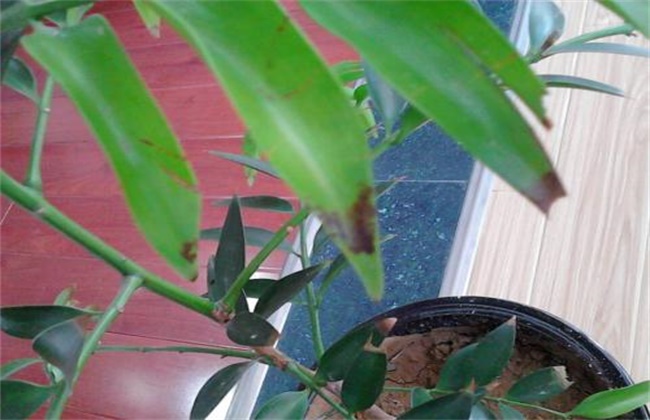
1. Excessive light
Although the longevity bamboo likes to grow in the sun, it does not like strong light. When caring for it, it is best to place it in a shady spot without overly strong light. If it is placed under direct sun exposure in summer, its leaves are very prone to dehydrating and drying up, seriously affecting the ornamental value of the longevity bamboo. At this point it needs to be moved to a cool environment for care. If the temperature is too high, water also needs to be sprayed around the plant to lower the ambient temperature and increase air humidity, and it will recover before long.
2. Improper fertilizer and water
The longevity bamboo likes a moist environment, but it is not tolerant of waterlogging. Once it is watered too much, severe water accumulation in the pot will occur, causing the plant to develop root rot. In this way the plant cannot absorb nutrients normally, and over time the leaves will dry up and turn yellow. If it is not prevented and treated in time, it can even cause the plant to die. Using concentrated fertilizer can burn the root system and also lead to root rot. Therefore, when cultivating it, attention must be paid to fertilizer and water management. Roots that have already rotted should be cut off in time, and then the plant should be repotted and planted again.
3. Low-temperature frost damage
The longevity bamboo is not very cold-resistant and will suffer frost damage at low temperatures in winter. After its leaves are frozen, they will dry out. If this is not dealt with, the plant may freeze to death directly. At this point the frost-damaged branches and leaves need to be cut off, and it also needs to be moved to an environment at around 10 degrees to encourage it to sprout new leaves.
4. Damage from pests and diseases
When a plant suffers from pests and diseases, its growth will gradually deteriorate, it will lose its vitality and finally wither and die. The affected branches and leaves need to be cut off in time, the ventilation of the growing environment also needs to be improved, and fertilizer also needs to be applied for care. In addition, the right remedy should be used, spraying the corresponding pesticides for pest and disease control.
The above is an introduction to why the leaves of the longevity bamboo dry out. I hope it can help you. If you want to learn more related knowledge, please stay tuned to us.