The Simplest Method for Mixing Orchid Potting Medium: Each Soil Layer Has Different Requirements
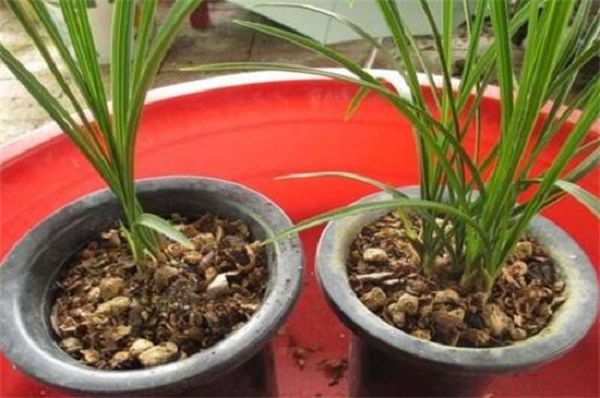
Orchid roots are fleshy and have fairly strict soil requirements. The most common and simplest orchid potting medium mix is one that ensures good air permeability and drainage. First, a drainage layer such as coarse sand or coarse gravel can be added at the bottom. The middle layer mainly uses nutrient-rich soil, such as leaf mold, pine needle soil, humus soil, pond mud, grass peat, or peat soil. The top layer of soil mainly serves to retain moisture, and sphagnum moss or foam blocks can be used.
I. The Simplest Method for Mixing Orchid Potting Medium 1. Bottom layer
Orchids are flowering plants with fleshy roots and have very high soil requirements during cultivation. Generally, the simplest orchid potting medium mix first ensures good air permeability, mainly by adding a drainage layer at the bottom of the pot, such as coarse sand, coarse gravel, or relatively large crushed brick pieces, so that the soil has better air permeability and drainage.
2. Middle layer
Generally, the middle layer of the potting medium provides rich nutrients, so nutrient-rich soil can be chosen for the middle layer when cultivating orchids, such as leaf mold, pine needle soil, humus soil, pond mud, grass peat, or peat soil. This type of soil contains a large amount of minerals and can effectively provide the nutrients needed by orchid roots.
3. Top layer
The top layer of potting medium mainly serves to retain moisture, and small-particle soil is best, such as foam blocks, pine leaf soil, sphagnum moss, peanut shells, and tender branches. It not only increases the beauty of the potting soil but also gives the potting soil good drainage. If large-particle soil is used, the potting soil's water retention will be very poor, which is not conducive to normal root growth.
II. Key Points for Orchid Care 1. Light and Temperature Treatment
Light is a key factor affecting orchid blooming. During spring and summer, place it in a shaded sunny spot, or at an indoor ventilated window, and rotate the pot once every two weeks so that the plant receives light evenly. During the cool autumn period, it should receive more light, generally about half a day. When the temperature is relatively low, cover it with a layer of plastic film to prevent freezing.
2. Watering and Moisture Retention
Orchids do not have high water requirements. Usually, water as little as possible. During the plum rain season, the air humidity is very high, so they should be moved indoors for care. In summer, water in the morning and evening, keeping the potting soil slightly moist. In autumn, the amount of watering can be appropriately increased. During dry seasons, spray frequently to keep the leaf surface moist for a long time. In winter, watering should be thorough.
3. Nutrient Supply
Orchids are fertilizer-loving plants and can bloom most beautifully with sufficient fertilizer. During usual fertilization, apply as little nitrogen fertilizer as possible to avoid nutritional imbalance. In spring and autumn, apply liquid fertilizer once every 2 to 3 weeks. Fertilization should be done in the evening, and at the same time, spray potassium dihydrogen phosphate on the leaf surface about every 20 days.