Why Are the Leaves of the Radermachera Sinica Drying Up?
The Radermachera sinica, also known as the bean tree, is a plant that likes to grow in hot and humid environments. It has high ornamental value and is grown over a very large area in China. However, when growing a Radermachera sinica, whether as a potted plant at home or on a larger scale, the phenomenon of dried-up leaves can occur. So why do the leaves of the Radermachera sinica dry up? Below, the editor will give you a brief introduction, so let's take a look!
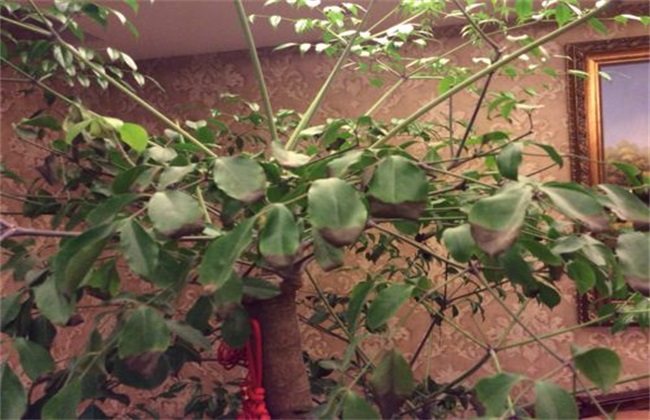
1. Excessive light
During the cultivation of the Radermachera sinica, if the leaves dry up, then the first thing to consider is whether it is caused by excessive light. This is because the Radermachera sinica has fairly strong shade tolerance, but it is very unsuited to strong-light environments. Especially in the high-temperature, strong-light environment of summer, if no shading work is done and the Radermachera sinica is left growing in a strong-light environment for a long time, then its leaves will be scorched by the strong light, causing the leaf moisture to evaporate and the leaves to wither. Therefore, we should pay attention to doing good shading work to ensure the Radermachera sinica grows in a suitable semi-shaded environment.
2. Unsuitable temperature
As just mentioned, the Radermachera sinica likes to grow in a warm environment. Its suitable growth temperature is around 22°C. During the growth of the Radermachera sinica, if the temperature goes beyond the range of 10-30, then its growth will be affected as a result. Too high a temperature will cause the leaf moisture to evaporate too quickly, leading to dry and withered leaves. And if the temperature is too low, the leaves are also prone to cold damage, likewise showing cold injury. Therefore, we should pay attention to controlling the temperature well, doing good shading and cooling work in summer, and paying attention to cold protection and warmth in winter.
3. Excessive fertilizing
During its growth, the Radermachera sinica has a fairly large demand for nutrients. We should also do good fertilizing work, and when fertilizing we should follow the principle of applying more frequently but in small amounts. Be sure to control the amount well and do not fertilize excessively. If the fertilizer concentration is too high or too much fertilizer is applied, then the roots of the Radermachera sinica are very easily burned, the roots' absorption of nutrients and moisture is hindered, and the leaves lack nutrients and moisture and wither. If too much fertilizer has been applied, stop fertilizing in time, then appropriately increase the amount of watering to dilute the fertilizer and reduce the harm from the fertilizer.
4. Unsuitable soil
When growing a Radermachera sinica, the soil is very important, and soil rich in organic matter with strong permeability should be the main choice. If it is grown in a pot, then the soil should be changed at least once every two years; if the Radermachera sinica stays in the same soil for a long time, then the soil very easily becomes compacted, causing the growth of the Radermachera sinica to be hindered and the leaves to dry up from lack of water. Therefore, we should pay attention to improving soil quality, and if the Radermachera sinica withers because of soil reasons, the soil should also be changed in time to ensure it can recover its growth as quickly as possible.
The above is a brief introduction to why the leaves of the Radermachera sinica dry up. That is all for today's introduction. This article is for reference only, and I hope it can help everyone!