Why are the leaves of the clivia uneven in length?
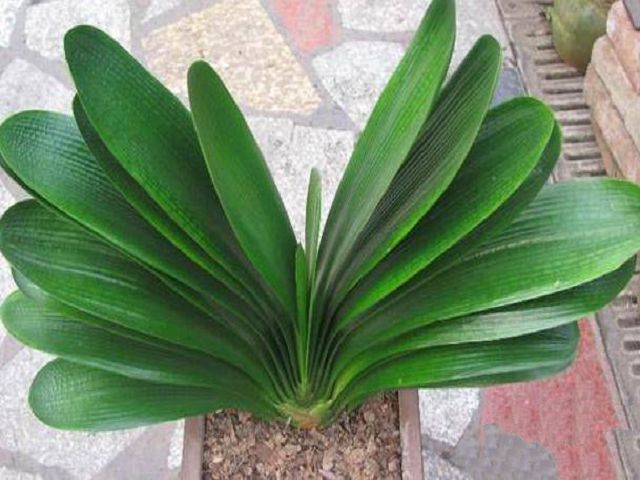
When growing clivia at home, it often happens that the leaves grow to different lengths and are not evenly uniform. The main reason is that nutrient supply is not timely and comes at intervals.
For example, at the beginning of the spring growing season, its leaves and the plant receive more nutrients, so it grows very fast and its leaves grow very long. But in the middle of that period the nutrients are not timely, and nutrients are lacking, so the leaves that grow next will be shorter because of the insufficient nutrients. When we notice it is growing slowly and fertilize it again, the third leaf has already come out and received enough nutrients, so it grows longer than the previous leaf. This continuous cycle causes this situation. Uneven nutrient supply is one of the main reasons for its uneven leaf length.
Another situation is improper watering on our part. For example, it grew well early on, and then later suddenly developed root rot, so the roots could not absorb nutrients. With no roots absorbing nutrients to supply its growth, it relied on the nutrients within the plant body to grow. After the nutrients in the plant body are used up, it will stop growing for a period. If you do not notice this and think it is lacking nutrients, it is actually root rot. Its rotted roots completely rot away and become hollow in the soil, and then new roots grow out. The plant did not completely rot away, and it did not show on the leaves either; only part of the root system rotted slightly. By the time we noticed, it had already resumed growth, so the leaves grew to uneven lengths.
There is also the situation of uneven light. When growing clivia, you must frequently turn the pot, turning it 180 degrees, which instead helps its leaves grow evenly and makes them less prone to tilting. If you keep it facing one direction for a long time, the leaves at the back, the leaves facing away from the light, will grow shorter than the other leaves or be in poor condition due to insufficient light. During the care and growth process, you should frequently turn the pot, because every plant has phototropism. This includes when we grow other plants; if they always face the light, they will grow somewhat lopsided. Clivia is the same. Effectively turning the pot can encourage it to use light so that its leaves grow neatly, without becoming uneven in height or uneven in leaf shape.
Generally, clivia leaves that are not neat are caused by only these three reasons. Pay a little attention during care: fertilize it regularly, and do not interrupt or stop fertilizing. Use loose, breathable soil; when the soil is loose and breathable, even if you water too much, root rot is less likely to occur. During the care process, frequently turn the pot 180 degrees, once every half a month or once a month, so that it gets balanced light supplementation. Only then can its leaves grow neatly, flat, and thick.
When they are grown in greenhouses, they are separated by a layer of plastic film, and in summer there is shading. They also frequently turn the pots 180 degrees, and their light is very sufficient. So clivia grown in greenhouses grows with flatter leaf surfaces and more even height than clivia grown at home.