What are the disadvantages of the deep-litter cattle farming technique?
Nowadays many places emphasize green farming, so in recent years the deep-litter cattle farming technique has become relatively popular. However, many farmers who tried this method have chosen to quit, and others would rather deal with the laborious manure disposal themselves than use this technique. So what are the disadvantages of the deep-litter cattle farming technique?
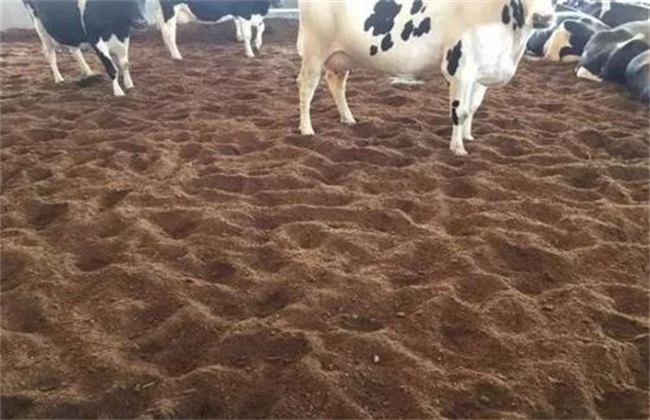
1. Narrow range of applicability
China has a huge population of free-range cattle farmers, mostly with herds of around a dozen or so head, and this group makes up a fairly large share. The deep-litter cattle farming technique, however, does not suit these people well. After all, with such a large upfront investment, the cost-to-benefit ratio is completely disproportionate; for free-range farmers this is an unnecessary extra, and there is no need to do it. As things stand now, deep-litter technology still needs to advance further, and ideally it should adapt to the needs of free-range farmers. Only then would it be a truly mature system, its range of applicability would naturally broaden, and more people would naturally use it.
2. Technical reasons
The deep-litter cattle farming technique has not been around for long, and many people do not understand it well. Its technical content is relatively high, and many cattle farmers do not understand aspects such as the choice of bedding material, the ratio configuration, and how to manage it. What issues to pay attention to when using it, and where to turn when you have questions, there is nowhere to find out how to solve them. This technique currently has too many difficulties, and many cattle farmers cannot figure it out in a short time. Only some people who have newly joined and lean toward tech-based farming will study it more deeply. If this technique becomes more and more mature later on, many farmers will understand it at a glance, and those willing to take it up will naturally increase.
3. Low production benefit
The production benefit here does not refer to the output of beef cattle, but to the income from cattle manure. Many people say that the bedding material fermented by this technique is a high-quality fertilizer, but in reality cattle farmers cannot enjoy this benefit. First, this bedding material is difficult to sell; second, this bedding material is difficult to transport. Farmers invest a large sum of money to do this, yet the final product gets stuck in their hands, so naturally many cattle farmers are unhappy. Raising cattle is mainly about making money, and everyone accepts the hardship and fatigue, but low production benefit is something people probably cannot tolerate.
4. Seasonal limitations
Seasonal temperature also has a fairly big impact on this method, which mainly relies on the microorganisms in the bedding material for biological fermentation. When the temperature is high, the microorganisms are relatively active, so in summer this ferments relatively quickly and the bedding material needs to be replaced more frequently. When the temperature is low, it is slower, so in winter the decomposition rate of cattle manure may sometimes fail to keep up with the rate at which it is produced, ultimately causing manure to pile up. To balance this aspect of the problem, a certain understanding of fermentation technology is required.
These are some of the current disadvantages of deep-litter cattle farming. Of course, we do not deny the advantages of this technique either; it is just that everyone should decide based on their own actual situation. If you have a way to solve some of the more impactful problems, you might as well give this technique a try, since every technique always has its benefits.