What to Do When a Rose Loses All Its Leaves? Find the Cause and Remedy It in Time
Roses are a flowering plant that many people greatly love, and the market for growing them as potted plants in China is also very large. Nowadays, quite a lot of people grow potted roses. No matter how we grow roses, problems that affect their growth often arise, causing their ornamental value to decline. Losing all the leaves is one of these problems, so what should be done when a rose loses all its leaves? Below, the editor will briefly introduce this for everyone. Let's take a look together!
1. Pest and Disease Control
Roses have relatively poor disease resistance and are very susceptible to pests and diseases during care. For example, powdery mildew, red spider mites, and so on; most pests and diseases affect the leaves of roses. This causes leaf drop and similar phenomena in roses. If not treated in time, once the leaves have all fallen off, the plant ends up bare-stemmed. Therefore, pest and disease control is very important. Before pests and diseases occur, we need to do a good job of prevention, strengthen management, and improve air permeability. After pests and diseases occur, the diseased leaves should be pruned off in time, and then the corresponding pesticide should be sprayed for treatment.
2. Reasonable Pruning
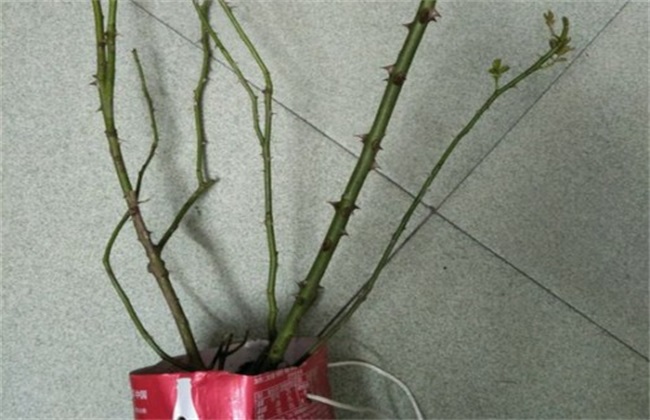
After a rose has lost all its leaves, since this has already happened, we need to manage it well so it can sprout again as soon as possible. Under normal circumstances, the branches can sprout again in about 7-15 days. However, if all the branches sprout at the same time, then the nutrients and water inside the plant will definitely not be enough. Therefore, the new buds are prone to wilting and withering, so after the plant becomes bare-stemmed, we should prune it in time. Cut the branches shorter to avoid consuming too many nutrients, ensure that subsequent new buds can grow normally, and promote the rose's recovery of vigor as soon as possible.
3. Water Control
After all the leaves on all the branches of a rose have fallen off, it becomes bare-stemmed. At this time, because there are no leaves for photosynthesis, the rose's demand for water will also decrease, so we should appropriately reduce the amount of watering. If we still water according to the method used when the branches and leaves were lush, then the roots will not be able to absorb all this water, and it is very likely to cause root rot in the rose. This affects the entire plant and can lead to death in severe cases. Therefore, we should pay attention to controlling the amount of watering, and can appropriately increase the light duration so it can sprout as soon as possible.
4. Causes of Fertilizer Damage
Fertilizer damage is the main cause of leaf drop and bare stems in roses. When fertilizing, if too much fertilizer is applied, it easily burns the roots; when the roots are damaged, the leaves will naturally react as well. Fertilizer damage is mainly caused by improper proportions of fertilizers such as compound fertilizer. Fertilizer damage not only causes leaf drop and bare stems, but in severe cases can also cause death. Therefore, if leaf drop occurs due to fertilizer damage, then the soil should be changed in time or water should be applied to dilute the fertilizer. If the plant has already become bare-stemmed, then the potting soil should also be replaced in time to avoid continued harm. When fertilizing, we should also pay attention to fertilizing regularly, controlling the amount of fertilizer well, and not applying too much.
The above is a brief introduction to what to do when a rose loses all its leaves. That is all for today's introduction. This article is for reference only, and we hope it can be of some help to everyone.