How to effectively prevent Clivia miniata from getting stuck flower scapes
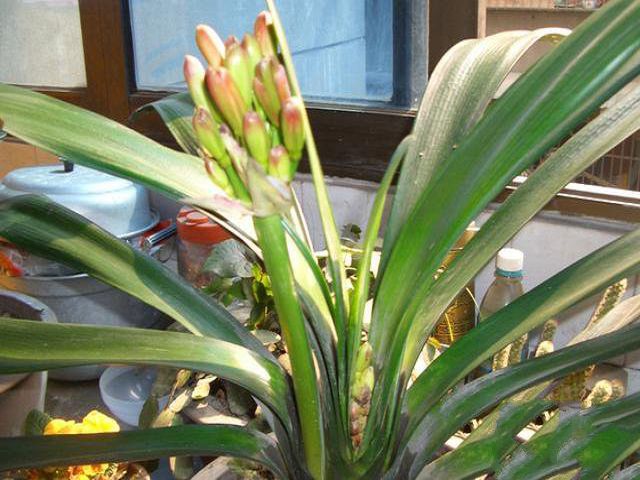
Generally, the flower bud differentiation period of Clivia miniata is from July to August each year, and the flowering period is concentrated in winter and spring. However, Clivia miniata is a flower that can bloom all year round, so it will also bloom in autumn or summer. It is somewhat difficult to grow Clivia miniata to bloom every year, and getting it to produce standard flowers is even harder. The most common problem when Clivia miniata blooms in daily cultivation is a stuck flower scape: you wait eagerly for a flower scape to appear, but it just will not grow out, which makes people extremely anxious. In fact, preventing Clivia miniata from getting a stuck flower scape should be done in advance, rather than waiting until it is stuck and cannot grow out to panic. Starting now, if we pay attention to the following four aspects, we can effectively prevent Clivia miniata from getting a stuck flower scape.
Light
After experiencing summer dormancy, Clivia miniata enters a rapid growth and reproductive stage in autumn, so in autumn and winter we must ensure light, which should be no less than four hours per day, so that it can carry out sufficient photosynthesis. This can both produce more nutrients needed for flowering and prevent leggy leaves. Everyone pays relatively good attention to this point, so it is not a big problem, but while ensuring light, we must also do a good job of shading. Some people like to keep a small night light on at home, leaving it on all night. Although the light from a small night light is relatively weak, it can still affect the growth of the Clivia miniata flower scape. Flower lovers with this habit can place the Clivia miniata in a darker place at night, or cover it with a large cardboard box with ventilation holes poked in it. That is, during the reproductive stage of Clivia miniata, when it should be bright, it should be bright, and when it should be dark, it should be dark. Do not keep it bright both day and night, thereby causing a stuck flower scape.
Temperature difference
The vigorous growth of the Clivia miniata flower scape cannot be separated from a temperature difference. After Clivia miniata enters the reproductive stage, it is best to have a day-night temperature difference of about ten degrees. If there is no temperature difference, or the temperature difference is too small, it is easy to cause a stuck flower scape. Especially for flower lovers in the north, where homes have heating in winter and the temperature stays the same for twenty-four hours, it is somewhat difficult for the flower scape to emerge. At night, the Clivia miniata can be placed in a relatively cool place to create a suitable temperature difference. The temperature difference is not only beneficial for the flower scape to emerge, but can also make the flower color more vivid and increase its ornamental value. However, note that the temperature difference should be based on the temperature suitable for Clivia miniata growth, around twenty degrees. If the temperature is too low, a stuck flower scape is also very likely to occur.
Water
During the reproductive stage of Clivia miniata, watering should be stable. Water when the potting soil is dry; do not deliberately control water or increase the amount of watering. Because flower bud differentiation occurs in July and August, whether the flower buds have differentiated is already settled now, and controlling water is not very meaningful. Instead, it will affect the emergence of the flower scape. When watered too much, the roots lack oxygen, or the root system rots, and nutrients cannot be normally transported to the flower scape, which will also affect flower scape growth. Therefore, when growing Clivia miniata in autumn and winter, you should have a calm mind, not be impatient, and just grow it step by step.
Nutrients
Generally, when the temperature drops and autumn begins, pay attention to fertilizing Clivia miniata. You can apply some fertilizer with a higher phosphorus and potassium content, which helps the flower scape sprout and grow. If the phosphorus and potassium fertilizer supplemented in autumn is insufficient, a stuck flower scape may occur in winter and spring. Therefore, fertilizing Clivia miniata in autumn must be taken seriously. If your Clivia miniata has not been fertilized until now, then fertilize it quickly; there is still time.
When Clivia miniata has already developed a stuck flower scape, it should also be solved based on the above four points. On the one hand, provide short-day light and keep it in a dark place the rest of the time. On the other hand, increase the temperature difference to stimulate the flower scape to grow out. Third, water reasonably, neither too much nor too little. Fourth, you can apply a little quick-acting fertilizer to help the flower scape emerge. If you have growth regulators such as gibberellin at home, spraying a little on the stem is also beneficial for the flower scape to emerge.