What are the key considerations for cow breeding methods and timing?
Cattle farming is the largest livestock farming project by scale in our country. The beef market in our country is also very large, but raising cattle is not as simple as we imagine. When raising cattle, we need to do a lot of work well, especially the breeding of cows. Breeding directly affects the overall development of the herd, so how should cows be bred? And when should they be bred? Let's take a look at cow breeding methods and timing together with the editor below!
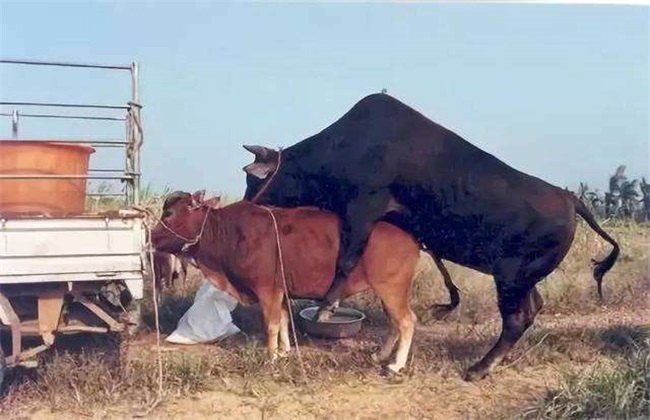
I. Breeding methods
1. There are generally three breeding methods for cows. The first is the more common natural mating. The fertilization rate of natural mating is relatively high. Simply let the cow and bull mate on their own; there is no need to perform estrus detection for the cow, but it is impossible to do a good job in preventing reproductive tract diseases. Then there is artificial assisted mating carried out in the same way as natural mating. This is mainly used when the size difference between the bull and cow is too large and the bull cannot mate normally with the cow; at this time, manual assistance is needed to help the bull and cow mate.
2. The third is artificial insemination. Artificial insemination first requires collecting the bull's semen. After careful examination, freezing, and then thawing, it is inserted into the reproductive tract of a cow that is already in estrus. When examining and freezing the semen, a relatively fast speed should be maintained, controlled at around 10 seconds. The container lid should be covered promptly to avoid evaporation of liquid nitrogen or the entry of other substances that would reduce semen quality. Then a protective sleeve should be placed around the container, and care should be taken when picking it up and putting it down to ensure stability without vibration. It must not be exposed to the sun. If transportation is needed, liquid nitrogen must be replenished regularly to avoid damage to the container, which would lead to a decline in semen quality.
II. Breeding timing
1. Heifers gradually begin their first estrus at the age of six months to one year. At this time, the estrus period of the cow is relatively short and has no regular cycle. Because the reproductive system and body functions of heifers have not yet matured, they are not suitable for breeding. Generally, the sexual maturity time of bulls and cows is about one year. Although they have reproductive capacity by then, because bulls and cows are also in a period of vigorous growth at this time, breeding would affect their later growth and reproductive capacity. This leads to a shortened reproductive lifespan and reduced vitality and production performance, so breeding is not suitable at this time.
The breeding time of cows should be determined according to the time of body maturity. Under normal circumstances, whether bulls or cows, they basically complete this by about 3 years of age and enter the body maturity period, at which point breeding can begin. However, the breeding age still depends on the breed. For example, the breeding time for native yellow cows is around 1.5 years, while for bulls it is around 2 years. For excellent hybrid breeds, both are mainly at 1.5 years, depending on the growth condition of the cattle.
The above is a brief introduction to cow breeding methods and timing. That is all for today's introduction. This article is for reference only, and we hope it can help everyone!