Several Models of Ecological Duck Farming: Which One Suits You?
Ecological duck farming is an expansion of previous duck farming models, further refining the various ecological farming methods of the past. More and more people are raising ducks this way now, but this model generally requires a relatively large breeding site, so let's take a look together at what ecological duck farming models there are.
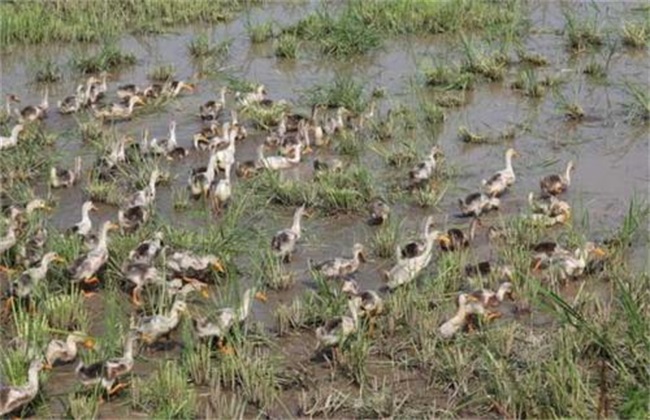
1. Natural Free-Range
This is the most extensive farming model, mainly choosing places with relatively abundant wild resources and then free-ranging the ducks there naturally. Ducks have a habit of living in groups, so the ducks generally will not scatter, and when the resources in one place are exhausted, they can be moved to another place at any time. This model suits small-scale farming and is basically an unmanaged free-range approach; the farming quality is relatively good, but the fattening effect depends on how good the site the farmer chooses is, and whether feed is used for fattening.
2. Fish-Duck Polyculture
Fish-duck polyculture is meant to form a cycle: the duck manure provides feed for the fish, and the ducks can also prey on the fish, making the ducks grow faster, and at the final harvest there can be double returns. However, in this model, the farming density needs relatively more attention; if it is too dense, it will affect the final fattening effect of the ducks. Under this model, you can choose some meat ducks with decent egg-laying performance; after all, the quality of duck eggs under this model is quite high.
3. Rice Paddy Free-Range
Rice paddy free-range farming is probably not unfamiliar to everyone, especially to farmers in the paddy field areas of the south, who understand it quite deeply. However, this model has certain requirements for timing, and secondly the planting density of the paddy field also needs to be controlled; the ducks should also be chosen a bit smaller, so that the ducks are more suitable for moving through the rice paddy. They can only be released after the rice has grown to about half a meter tall; the ducks can eat things like insects in the paddy field, and the duck manure can serve as fertilizer. After the harvest, the rice remaining in the field can let the ducks feed, so it is not wasted. Those with paddy fields nearby can consider this model more.
4. Wetland Farming
This model requires the local area to have a relatively broad wetland environment, and secondly there need to be many aquatic organisms, such as small shrimp and small field snails, and it may also require artificial introduction of some to let them reproduce. When the aquatic organisms are extremely abundant, wetland farming can be carried out; the ducks raised this way will fetch a relatively high price, but the growth time is longer, and the density should be properly controlled to avoid ecological imbalance leading to farming failure.
The above is a brief introduction to the several current models of ecological duck farming. In fact, doing this kind of farming in rural areas now is quite worthwhile; you do not need to put in much effort yourself, and the consumer market for ducks is also not bad, so ecological farming is worth everyone's consideration.