What should you pay attention to when free-range farming pigs? These breeding points need to be mastered
Free-range pig farming is a relatively popular breeding method at present, but this breeding technique is relatively immature, and many farmers may not be very clear about what to pay attention to when doing this kind of farming. Below, let us understand together what aspects need attention when raising pigs in a free-range way.
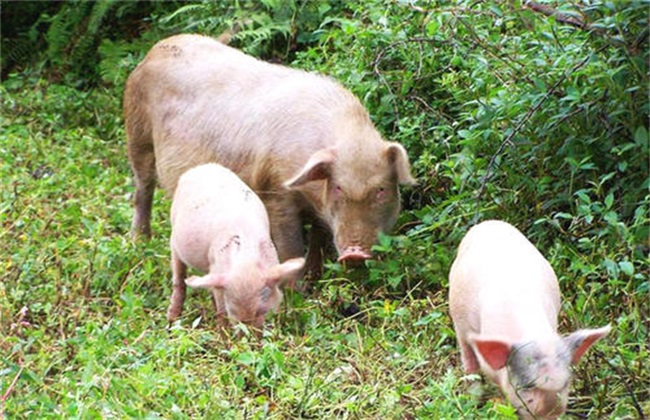
1. Breeding location
Free-range pig farming cannot be done just anywhere; a suitable site is needed, because many factors cannot be controlled artificially. The address should be as remote as possible, so that many uncertain factors can be reduced during breeding. Secondly, forage should be abundant, mainly tall trees, otherwise it will be very inconvenient for personnel when managing in between. The terrain should not be deliberately somewhat sloped, but there should not be large fault-like places, as this is a way to prevent free-range pigs from falling and getting injured. For some places with large undulations, it is best to level them appropriately; places like some valleys are generally quite ideal. There must be suitable simple pig pens built in the middle; free-range pig farming does not mean complete free grazing.
2. Temperature control
In terms of temperature, what needs attention is the local minimum temperature. When the temperature is high, there are ways to cool it down, and the temperature in the mountain forest will not be too high either. But when the temperature is low, it is hard to say, after all, it is impossible to keep the pigs penned all the time, because then the meaning of free-range farming would not be great. Generally, when the local temperature is at its lowest, not lower than about 10°C, and the duration cannot be too long, that is a relatively ideal temperature. Short periods of low temperature can be handled by appropriately penning them for a while to get through. For piglets, an outdoor temperature above 25°C is relatively ideal; if lower, piglets are prone to problems.
3. Hygiene management
It does not mean that free-range pig farming does not require hygiene management; it is just that cleaning hygiene is relatively less frequent, but it still must be cleaned the same way. Hygiene management for free-range pigs mainly includes these aspects: first, cleaning and burying pig manure and similar waste; second, cleaning the pig pens; third, cleaning residual matter at the feeding site. However, generally it is mainly aimed at the area near the pig pens. Places where the pigs are active in the wild should be checked regularly; if there is not a relatively large accumulation of residual matter or excrement, there is no need to care much, as it will generally degrade naturally. Secondly, regular disinfection is also needed, mainly aimed at places where free-range pigs stay more often.
4. Feeding issues
Free-range pig farming does not mean that feeding is unnecessary. After all, the penned area does not have sufficient nutritional supply for so many pigs to grow, and secondly, even if it did, the fattening effect would be too slow, so when free-range farming, it is actually also necessary to use feed appropriately for fattening. However, daily food is mainly some fresh vegetables, combined with some concentrated feed for rapid fattening, and the types should be as diverse as possible, avoiding a single food, so that the quality of the pigs raised is better.
The above are some precautions for free-range pig farming. Free-range pig farming mainly provides pigs with more activity space, and then combines some penned fattening methods to achieve an obvious fattening effect. Farmers must pay more attention to these issues, so that they can raise better pigs.