The correct method and precautions for watering orchids
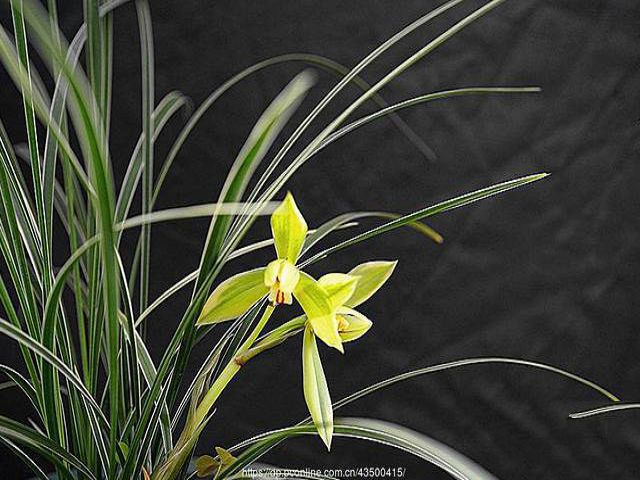
More and more people are growing orchids now, but many who love growing orchids also find them rather difficult to care for, especially when it comes to watering - they just do not know how to water them. First, let us talk about what kind of water should be used to water orchids.
Choosing water for orchids is actually very simple. It should be said that as long as water is safe for people to drink, it can be used to water orchids. Many flower lovers choose to use rainwater or snow water to water their orchids, but now industrial pollution and other problems are very serious, and there are also saline-alkali areas, so rainwater is generally either strongly acidic or on the alkaline side. Most people choose treated water that people can drink normally; its pH is close to about 5.5, which is relatively safe for watering orchids and will not hinder their growth. If you grow many orchids, you can keep water-quality pH test strips at home. If your water is on the alkaline side, you can neutralize it with edible rice vinegar; if it is on the acidic side, you can neutralize it with edible alkali. Try to adjust the pH to about 5.5 - that is a very suitable water quality for growing orchids.
There is also particularity to the timing of watering orchids, because orchids have fleshy roots. If the potting soil is too wet, it will cause root rot, and if it is too dry, growth will be hindered. You mainly just need to choose when to water according to the environment where you place them and the season. In winter, the temperature is very low. If you directly water with cold water, it is very chilly, the roots simply cannot absorb it well, and it may even cause cold damage. You should put the water you are going to use in the sun to warm up, and use it to water the flowers only after it is close to room temperature. In winter, the watering time should be chosen one or two hours after the sun rises, so it is more appropriate, less likely to damage the roots, and easier for them to absorb.
In summer, the temperature is very high, and under the sun the potting soil is very hot, so you also cannot directly water with cold water. Do not water with cold water just drawn from the well; you can also put it in the sun to warm up first. In summer, the best time to water is in the morning or evening, after ventilation is good and the temperature has dropped a bit. In spring and autumn, the temperature is relatively not so high, so watering is more casual - you can directly water when there is good light and good ventilation.
Watering orchids should be chosen according to the time or season, and also controlled flexibly according to the type of orchid you have and its growth condition. You cannot just follow a set routine; this is something you have to figure out through practice. If you grow them outdoors, especially if they are exposed to rain, after the rain it is best to thoroughly water them once with clean water, to prevent the rainwater in the potting soil from heating up and causing residual heat to damage the roots. Rinsing with clean water solves this very well. When we grow fruit and vegetables at home, after it rains, the elders would always irrigate once with clean water to prevent the rainwater from becoming too hot and damaging the roots of the vegetables we grow - it is the same principle.
The principle for watering orchids is to give them a thorough watering when the potting soil is almost completely dry - that is, when the growing medium at the bottom still has some moisture, but not much - then water. The simplest method is to find a long bamboo skewer and insert it directly to more than half the depth of the potting soil. Whenever you want to water, pull out the skewer and check: if there is no moisture at the bottom, you can directly water thoroughly; if there is still moisture, wait another day or two before watering. You cannot water orchids according to a set number of days, because the regional environment is different and the potting soil mix ratios are different, so the drying speed is definitely different. You cannot go by days; choose the watering time according to how dry the potting soil is.
The method of watering orchids is also very simple. We can directly use a spray head to rinse the leaves and water directly from above the pot, but this watering method requires maintaining good ventilation, because if ventilation is poor, after the water runs into the pot, rot is likely to occur. With good ventilation, you can use this method - it can both thoroughly wet the growing medium and rinse dust and the like off the orchid leaves. But if ventilation is poor, you need to choose another method. The other method is to use a spray bottle or watering bottle and water around the edge of the pot, turning the pot as you go, watering slowly, turning the pot so that all the growing medium gets soaked through. Absolutely avoid watering only half - if you water half, the other half gets no water, and half the roots will dry out. Because the growing medium we use all has very good air permeability and drainage, if you water from one side, the other side easily does not get water, so you should water while turning the pot, and wet all the potting soil as thoroughly as possible.
There is another method, the soaking method, which many flower lovers use, but this method is not recommended. Although soaking is convenient - you just put it in water, and it is not easy to wash away or wash out the soil - this method is not recommended. Because soaking pot after pot takes a lot of time, and it easily spreads diseases and viruses. If you soak multiple pots in the same basin of water, some plants are robust, while some have bacteria or fungi in their potting soil. Soaking them in one basin will lead to cross-infection and make your orchids impossible to grow well. Once multiple pots are infected, just think about the consequences. The best method is to water while turning the pot.
Orchids have fleshy root systems; they absorb water quickly and dry quickly too. When grown at home, people generally choose tall pots, and their roots will reach deep down to the bottom of the pot. Some people who grow many orchids, especially beginners who start out with a whole lot of orchids, just use a faucet and spray everywhere when watering. This only soaks less than half of the potting soil; some even only moisten the surface soil, with no water at the bottom. Most orchid roots reach deep down to the bottom of the pot, and the roots at the bottom get no water at all - only the few roots in the surface soil absorb water. Over time, this leads to poor plant growth, and in severe cases the roots at the bottom dry up, leaving only a skin wrapping a thread inside. How can orchids be grown well that way?
So when growing orchids, either do not water, or water thoroughly - this is also a prerequisite for most plants. The principle of watering thoroughly is to keep watering until water flows out of the drainage holes at the bottom of the pot. Watering orchids also takes time to figure out, especially for beginners. Mix a growing medium with good air permeability and drainage as much as possible, keep the growing medium in a moist state rather than a waterlogged state, and fertilize regularly - then we can grow orchids very well.