A Detailed Guide to Masked Palm Civet Breeding Techniques and Management Methods
The masked palm civet is a precious wild animal belonging to the Viverridae family, also known as the gem-faced civet, and it is now fairly widely distributed in our country. Although wild masked palm civets are not allowed to be caught privately, they can be bred in captivity, and the masked palm civet farming area in the southern region is currently quite large. So how should masked palm civets be raised when farming them? Below, the editor brings you the masked palm civet breeding techniques. Let's take a look!
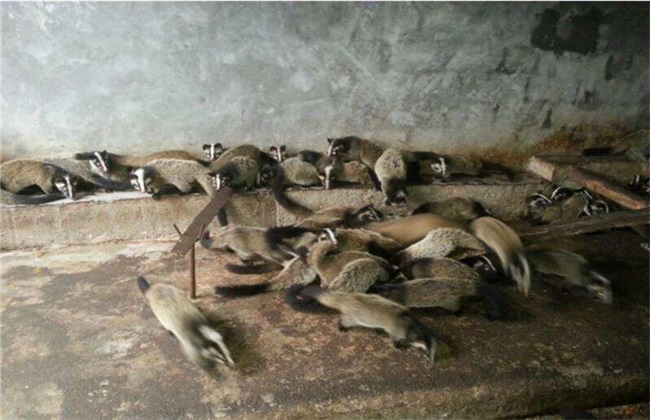
1. Building the enclosure
Building the enclosure for masked palm civets is a key measure in raising them. Based on the growth habits of masked palm civets, we should build the civet enclosure in a dry place with good ventilation and clean, ample water sources. We must also ensure the civet enclosure has good light-blocking and rain-sheltering performance. Prepare a rest room and an exercise yard, mainly simulating a wild environment. Then prepare various raising tools such as toilet pans and water and feed troughs, making ample preparations before raising. Finally, ensure there is a sufficiently large exercise yard so that masked palm civets have enough space to move about and chase each other after coming into estrus.
2. Feed
When raising masked palm civets, their behavioral characteristics change with the seasons. Therefore we should appropriately adjust the feed according to the season. For example, spring is the mating season and molting period for masked palm civets, so in spring the feed should mainly be high in protein. In autumn, the proportion of energy in the feed should be increased so that masked palm civets can accumulate sufficient nutrition for overwintering. In winter, masked palm civets enter a hibernation-like state, and both their activity level and their own nutrient consumption decrease, so the nutritional level can be appropriately lowered.
3. Environment
Masked palm civets are very timid and easily frightened, so during raising, care should be taken to minimize stimulation. For example, the influence of various sounds, people, and poultry and livestock. Control changes in light intensity well and avoid sudden changes in external factors, otherwise masked palm civets are highly prone to various stress reactions. For example, decreased appetite, restless and agitated behavior, and reduced resistance. Therefore when raising masked palm civets, we must pay attention to reducing their environmental stress. When masked palm civets are frightened, care should be taken to soothe them promptly so they can return to calm as quickly as possible.
4. Raising
When the birthing period of masked palm civets is approaching, care should be taken to provide them with ample drinking water, and unless in special circumstances, care should be taken not to catch them casually. Otherwise, after giving birth, if the masked palm civet is frightened, it is prone to eating its cubs. Then, based on the individual development of the masked palm civets, do a good job of raising them in groups. Keep the civet enclosure dry and hygienic, and in summer the temperature should be controlled at around 25 degrees to avoid triggering illness. Deal with odors in the civet enclosure properly, mainly using a fixed feeding method, and when feeding, follow the principle of fixed times and fixed amounts.
The above is a brief introduction to masked palm civet breeding techniques. That's all for today's introduction. This article is for reference only, and I hope it can help everyone!