What are the correct methods for disinfecting and cleaning a frog pond?
A frog pond always needs to be disinfected from time to time, and each disinfection is fairly important. But how exactly should the whole frog pond be disinfected? How can it be cleaned thoroughly? Let's take a look below at how to disinfect a frog pond! A mud-type frog pond only needs to be soaked in disinfectant and then refilled with water. The operation is simple, but a cement frog pond is different.
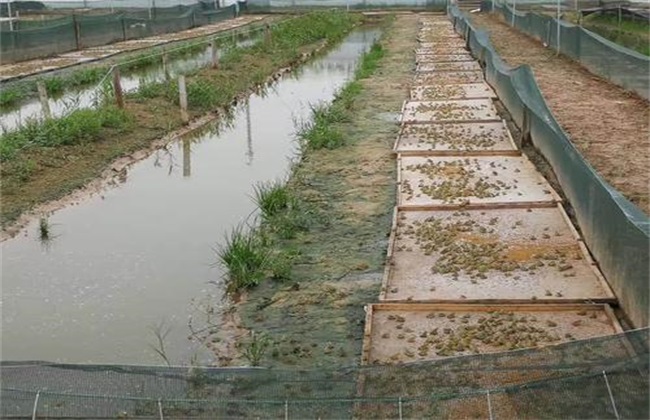
1. Soaking in disinfectant
Soaking in disinfectant is a very important task, and its main goal is to eliminate pathogens in the water of the frog pond; the water in a frog-raising site contains far more pathogens than the land. Soaking in disinfectant can be done in two ways. If there are no frogs, you can choose a stronger agent such as potassium permanganate, then leave the pond idle for a period before raising frogs again; if there are frogs, choose a milder disinfectant, such as compound iodine and the like. The soaking time is about 1-2 hours; any longer and the effect is about the same. The disinfectant must be evenly dissolved in the water, not poured in one spot all at once; if there are no frogs, you can consider stirring it.
2. Draining the frog pond
Once the soaking time is up, first drain the water from the frog pond completely. When draining, block the outlet with a mesh cloth; the mesh holes should be a bit larger so that larger particulate residue can pass out, while also preventing the frogs from escaping. When only a little water is left, you can clean it by hand and try to drain the water completely. Do not rush to remove the drainage mesh; wait until the final draining before taking it away.
3. Specific cleaning
Once disinfection is complete, cleaning needs to begin, and the whole frog pond must be cleaned through. First move aside coverings such as asbestos tiles in the frog pond, then drive the frogs to one side, and scrub with a brush; the lower parts of the walls and the ground should be brushed as much as possible. Then drive the frogs to the side that has already been cleaned and clean the other side; a rough cleaning pass is enough, as long as there is no obvious residue. When scrubbing, it is best to work together with a flow of water, which cleans more thoroughly, and then drain the water and residue out together.
4. Points to note
After cleaning is finished, restore everything, then add water back to the original water level. Then take all the items out and keep the frog pond in its original state. Note that when cleaning you should not spray water directly at the frogs; this is very bad for them. If needed, you can fill a bucket with water and pour it along the places where there are more frogs, letting the water flow slowly through the group of frogs. Secondly, in the few days after cleaning and disinfection, observe more whether the frogs in the pond show any abnormalities, and deal with them promptly if they do.
Cleaning a frog pond is actually fairly simple, and regular cleaning is really good for the frogs, so there is no need to worry. The main things are to learn more about the pros and cons when choosing a disinfectant, and secondly not to spray water directly at the frogs. Do these two things well and everything else is a minor issue.