How to Raise Ducks in Spring? Detailed Explanation of Feeding and Management Points
Ducks are a very common poultry farming project in China, and their farming area and distribution in China are very wide. When raising ducks, we must adjust our feeding and management methods according to seasonal changes. Only in this way can we ensure the normal growth of ducks. So how should ducks be raised in spring? Below, the editor brings you the key points of feeding and management for raising ducks in spring. Let's take a look!
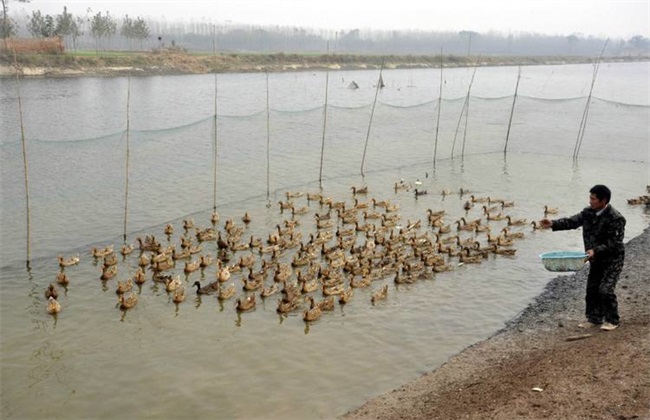
1. Temperature control
Temperature control for raising ducks in spring is very important. Because spring weather changes greatly and is highly prone to sudden cold and sudden heat, the harm to ducks is very great. Especially during the brooding period, the temperature must be kept stable, and only stable temperature can improve the survival rate of ducklings. During brooding, the suitable growth temperature for ducklings in the first three days is about 30°C. Then from the fourth day to the first week, the temperature can be appropriately lowered to about 25°C, and finally in the third week it can be kept at normal temperature.
2. Stocking density
The stocking density of the duck flock in spring is also very critical, directly affecting the air quality in the duck house and the overall growth of the duck flock. We should do a good job in grouping according to actual conditions to avoid piling. Especially in early spring and in the latter half of each night, the growth status of ducklings should be properly observed to avoid piling. The stocking density should be controlled according to the growth age of the ducklings. At one week, it should be controlled at about 28 ducks per sq m, at two weeks it should be reduced to 18 ducks, and after three weeks it should be kept at about 6 ducks. If the farming scale is large, then grouping should be done well according to size, strength, age and so on.
3. Light control
In early spring, natural light is still relatively scarce, and generally the days are short and the nights are long. Therefore, in order to meet the light needs of duck growth, attention should be paid to timely artificial supplemental lighting. Usually, the daily light time received by the duck flock should be kept at about 14-17 hours. According to the natural light time, artificially supplement the corresponding lack of light time. For example, if the natural light time is only 12 hours, then the artificial supplemental lighting time should be controlled within 2-5 hours. The light intensity should be kept at about 3 watts per sq m.
4. Sanitation and epidemic prevention
Spring is also a peak period for bacterial activity, so the sanitation and epidemic prevention work in the duck house also requires special attention. The duck house should maintain an all-in, all-out system and do a good job in epidemic prevention and disinfection. All people and vehicles entering and leaving the duck farm must be disinfected. Then the duck house, water and feed troughs, and drinking water must also be disinfected. Frequently observe the growth of the duck flock. When abnormal conditions in diet, spirit and other aspects are found, they should be isolated and checked in time. If they have lost treatment value, they should be culled in time and harmless treatment should be carried out well.
The above is a brief introduction to the key points of feeding and management for raising ducks in spring. That is all for today's introduction. This article is for reference only, and I hope it can help everyone!