What causes poor flowering in wild-collected Chunlan orchids?
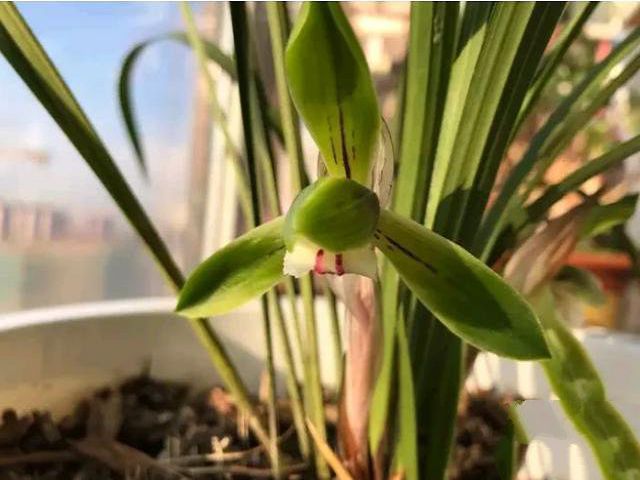
The optimum growing temperature for Chunlan is 18-28°C; in summer, when it exceeds 35°C, good ventilation must be ensured. Beware of high temperatures combined with high humidity, which makes the plant most vulnerable to disease. Chunlan is cold-tolerant and has no problem at -5°C. Spring is its flowering season, so give Chunlan a certain period of low temperature to ensure its winter dormancy, which helps it accumulate nutrients and form flower buds. This point is very important. At this time the temperature should be controlled at 3-10°C for about 40 days, which is the so-called low-temperature vernalization, suppressing vegetative growth and directing nutrients toward the reproductive growth needed for flowering. Without this process, it is difficult to bloom, or the flowers will be poor in form and lacking fragrance.
The reason your wild-collected Chunlan flowers poorly is straightforward: poor, unfragrant flowers are due to overly wet potting medium, and a glazed ceramic pot is unfavorable to root development. This can be judged from the anthracnose spots faintly visible on the orchid leaves and the presence of mold on the potting medium. Of course, shriveled buds are related to excessive water at emergence.
Illustration: Figure 1 shows white deposits on the leaf teeth and browning at the leaf margins; red circle 2 shows anthracnose spots faintly visible in the leaf tissue; red circle 3 shows mold on the potting medium, indicating it is too wet. Looking at the whole plant, the leaves show localized loss of green and yellowing. Control by restricting water and spraying prochloraz.
Chunlan is cold-tolerant, and wild-collected mountain orchids are even more cold-tolerant. This is the biggest difference between wild-collected Chunlan and common greenhouse-raised laboratory orchids. In winter, Chunlan can overwinter outdoors at -5°C. Wild-collected orchids grow naturally in winter on steep mountain slopes in biting cold wind, which shows their strong cold tolerance. As for growing habits, in winter, except on days of heavy snow and frost, it is best to cultivate them outdoors and give them as much of their wild, original ecological environment as possible. Orchid leaves may freeze but the roots are hard to freeze; in the wild there are fallen leaves, humus and soil for insulation, so a potted plant only needs temporary shelter indoors. As long as the outdoor temperature does not drop below -10°C, outdoors is better. Not to mention that your winter is 7-23°C!
Wild-collected orchids grow naturally in their native mountains, surviving on their own in the environment. Therefore, do not arbitrarily change their original environment by human intervention. When potting, only cut off dead leaves and rotten, damaged roots, and keep the soil from their home mountain. This soil contains native beneficial bacteria symbiotic with the orchid, which can help it adapt to the new environment as quickly as possible.
After pruning, do not do unnecessary things: washing the roots and disinfecting them, as this will destroy their original state. Wild-collected orchids have strong antibacterial properties and the ability to coexist with many kinds of bacteria. This is the biggest difference from potting greenhouse orchids, and likewise the potting medium does not need disinfection. After pruning, let the wounds dry and pot directly. Use a relatively dry, loose potting medium to naturally bury the orchid roots, with moderate firmness, and place in a cool, ventilated spot.
After potting, do not water, because the pruning wounds need to heal, and watering at this time easily causes infection. Water after four days. After potting, place in a cool spot for 7-10 days, exposing to soft sunlight before 10 a.m. In summer, avoid sunlight after 9 a.m. After about a month, switch to normal care.