What are the common farming models for grouper?
Grouper is a relatively precious fish, and many farmers want to get involved in farming it. With the development of farming technology, grouper farming has gradually adapted to local conditions in different places. At present, there are four relatively common farming methods. Let's take a look at which four farming models are more common, and you can learn about them together too!
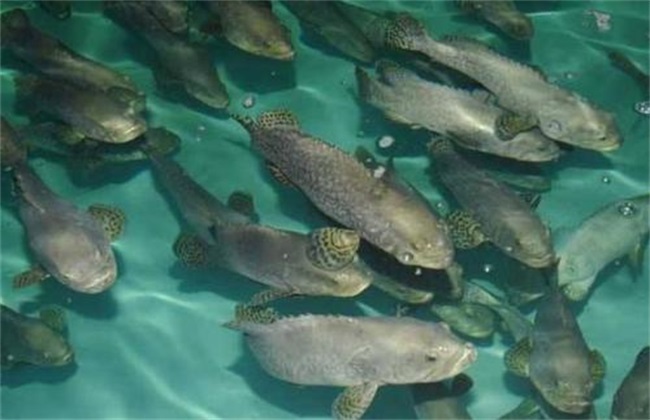
1. Pond farming
Pond farming is modified from ordinary fish farming methods. In the early stage, fish are raised in fish boxes in the water, which makes observation and management convenient. After they adapt, they are put into the pond for farming, which greatly increases the survival rate. The farming time in the fish boxes is about half a month; any longer and they will adapt to being raised in the boxes, which is not good for fattening. Also, when farming grouper in ponds, it is best to polyculture some other species, as this can ensure that the grouper grows relatively well. Species such as silver carp and prawns can all be considered.
2. Nearshore shallow-sea cage farming
This method is a relatively common farming method in coastal areas. Its difficulty lies in finding a high-quality farming base, which has a great impact on the later quality of the grouper. The main considerations are water quality, bottom quality, water flow speed and depth, wind and waves, and so on. When these are all relatively suitable, choose floating objects and place fish cages below for farming. Special attention should be paid to density, because if the density is too high, it will cause grouper to attack each other. Generally, a cage of 3*3*3 size holds about 600 seedlings of 5-10 cm, and later the number needs to be appropriately reduced.
3. Deep-sea cage farming
In recent years, there have been fewer and fewer areas suitable for farming in shallow-sea areas, competition pressure has been relatively high, and the probability of pollution is also somewhat greater. Many farmers have turned their attention to deep-sea farming. However, deep-sea farming technology is currently not very widespread. Farmers will have many choices when selecting places suitable for farming grouper, because there are many suitable places. However, when farming grouper in the deep sea, what farmers consider most is safety. Be sure to choose a safer point; even if the farming environment is a bit worse, it is no problem. Its farming method is similar to shallow-sea farming, except that the number of farming cages should be appropriately reduced by about 10%, because this method cannot adjust the farming quantity in a timely and targeted manner.
4. Industrialized farming
This is a relatively technological farming method. While it is highly technological, it also requires relatively more capital, but farmers are relatively relaxed, mainly spending more time on inspections. Its principle is a one-stop service of spawning, hatching, rearing, and marketing on site, and there are corresponding farming ponds for each, as well as equipment such as isolation ponds. Water quality and environment can be adjusted according to one's own needs, and the quality of what is farmed will be relatively much better. The returns brought by high investment will naturally not be bad either. Generally, industrialized farming comes with supporting technical farming introductions, so we will not say more here.
The above are several common ways to farm grouper. At present, they can basically meet the needs of most grouper farmers, but the species corresponding to these methods are all different. When farming, everyone must clearly understand what restrictions the species they choose has, or what methods are not suitable for farming it. If you want to learn more information, you can follow us!